
Into the Albertine Rift
The Albertine Rift is an area of volcanic activity and tectonic plate movement in east Africa, extending from Lake Albert in Uganda, south through parts of the Democratic Republic of the Congo (DRC), Rwanda, Burundi, to Lake Tanganyika in Tanzania.
It is a place of steep mountains, dense forests, and deep lakes, home to the source of the Nile River and a multitude of unique species of wildlife found nowhere else in the world. Perhaps the most famous of all these is the legendary mountain gorilla.
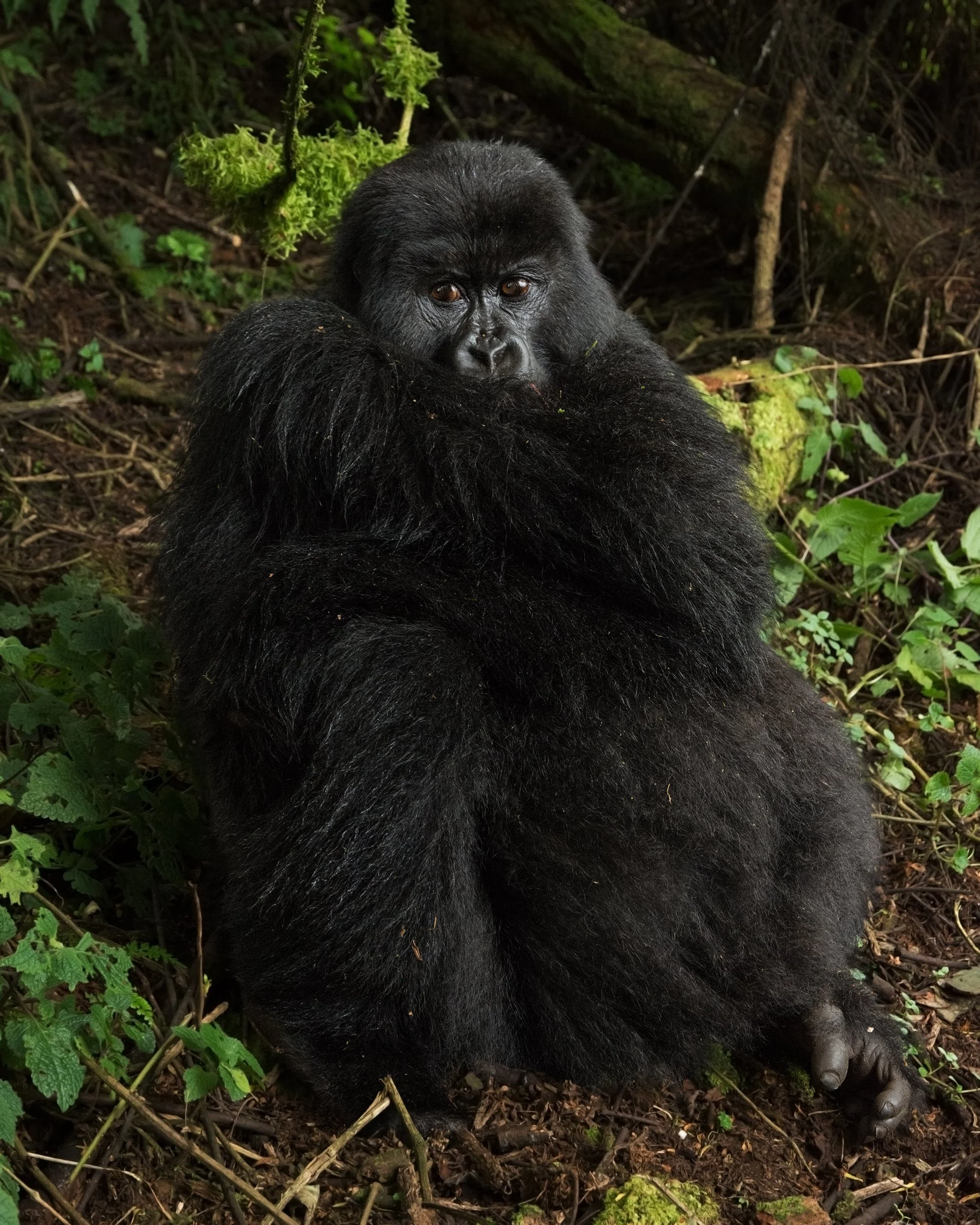
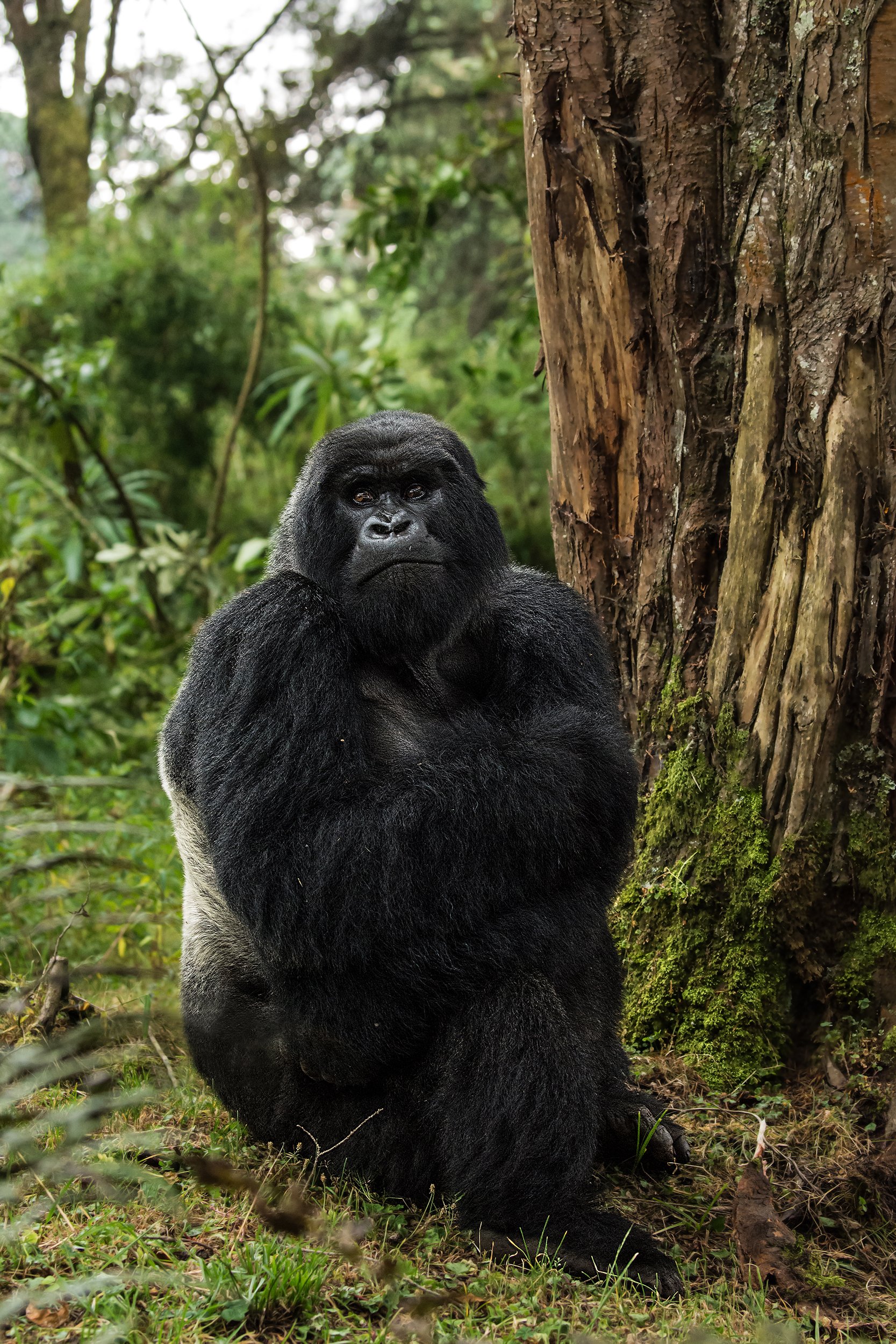
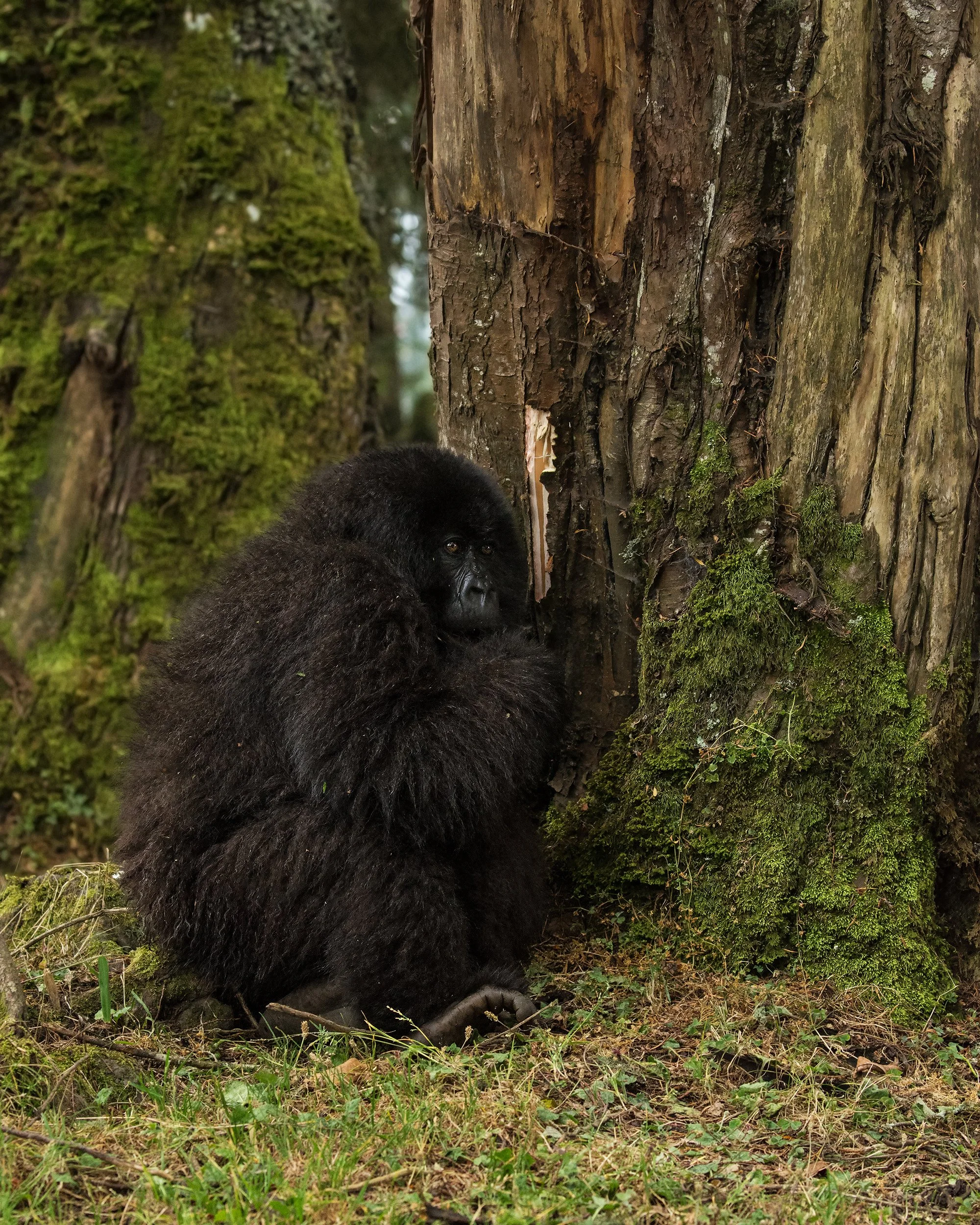
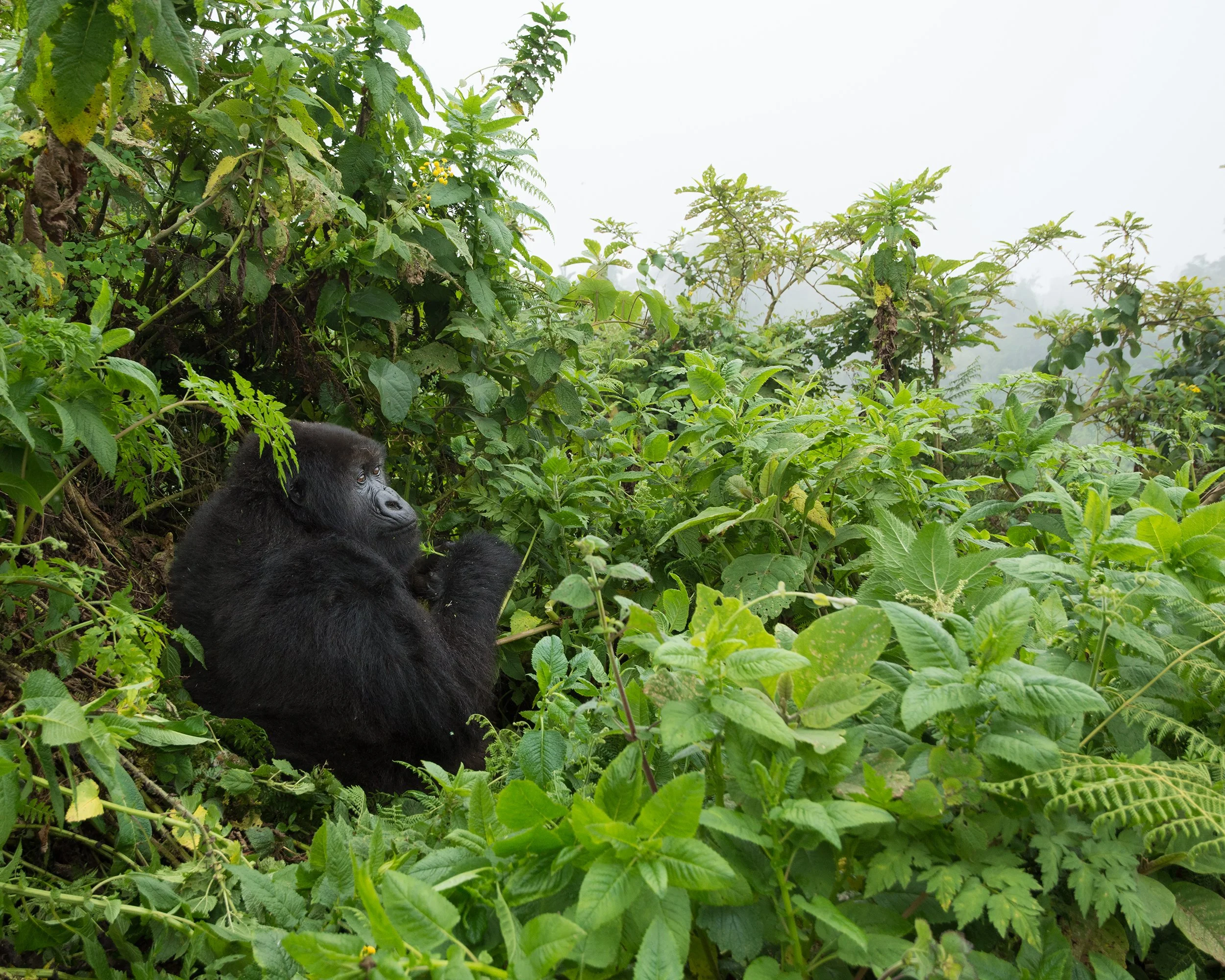
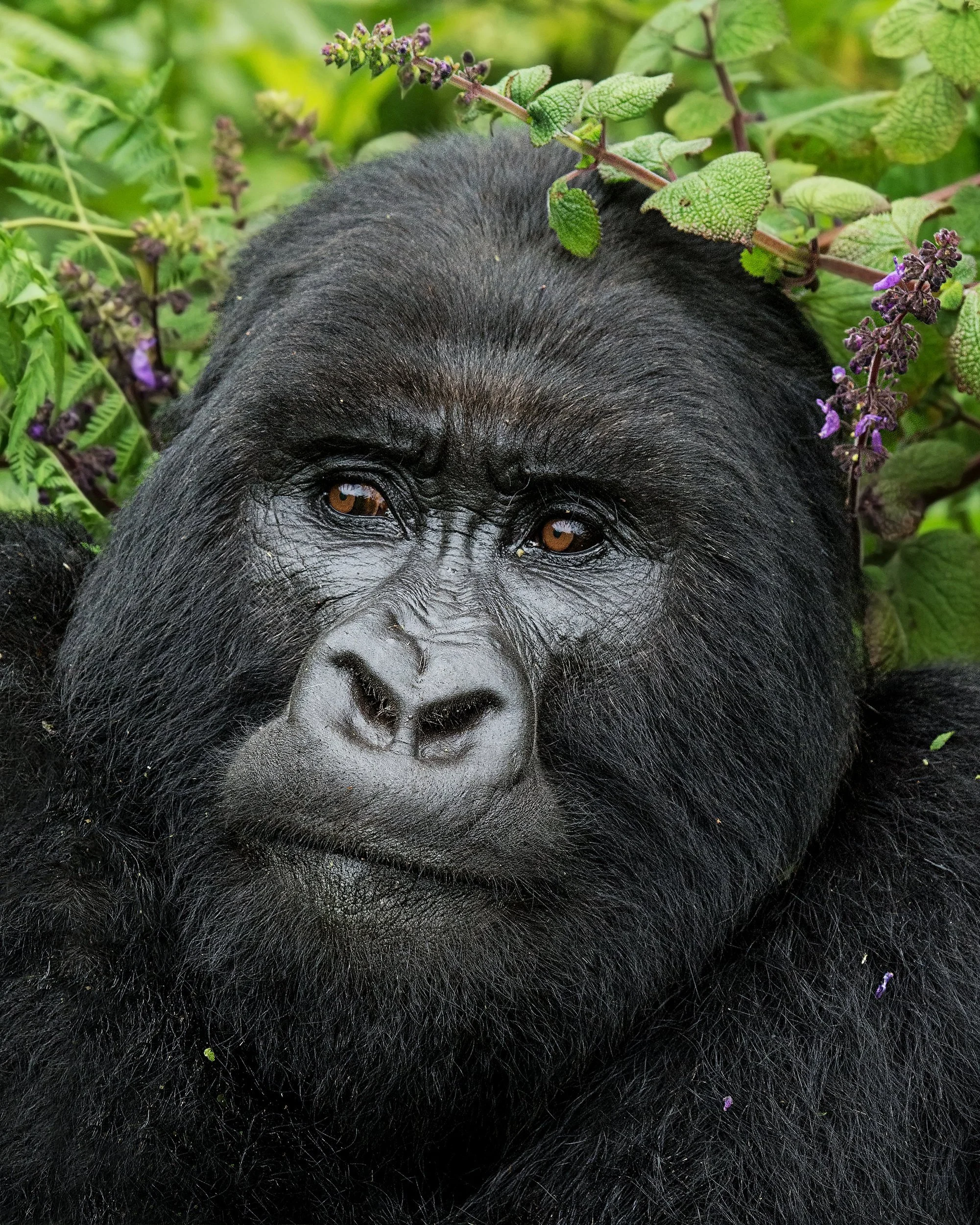
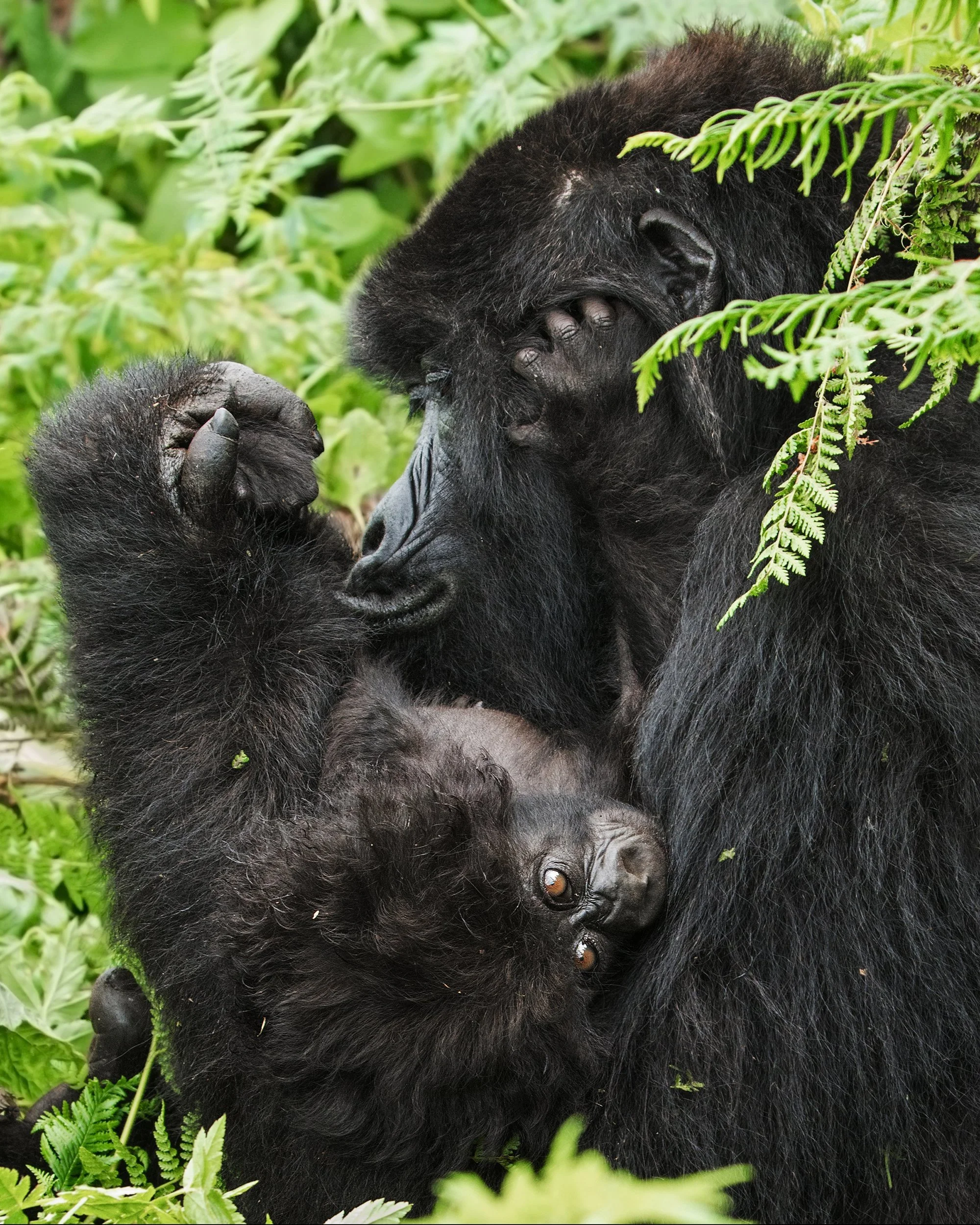
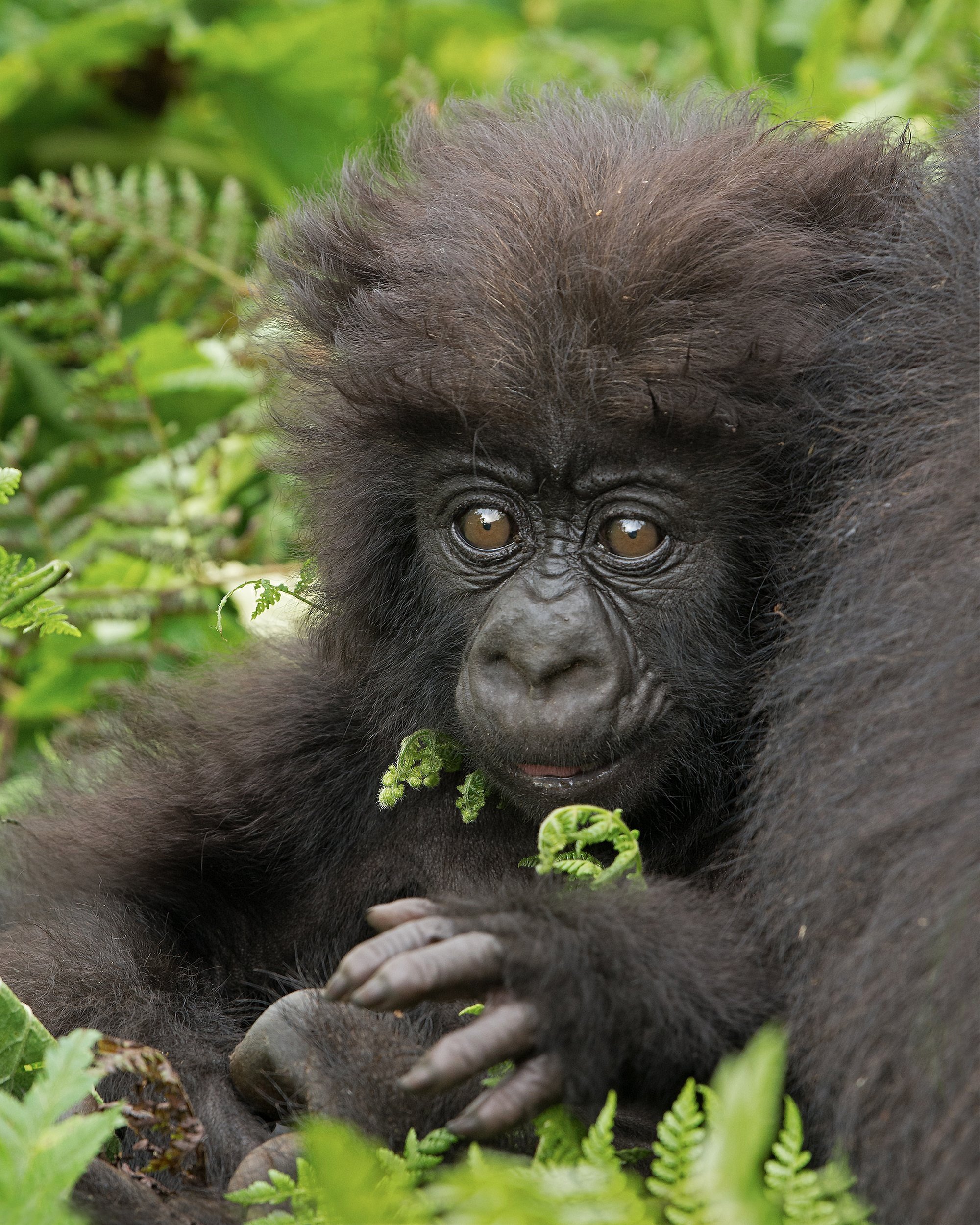
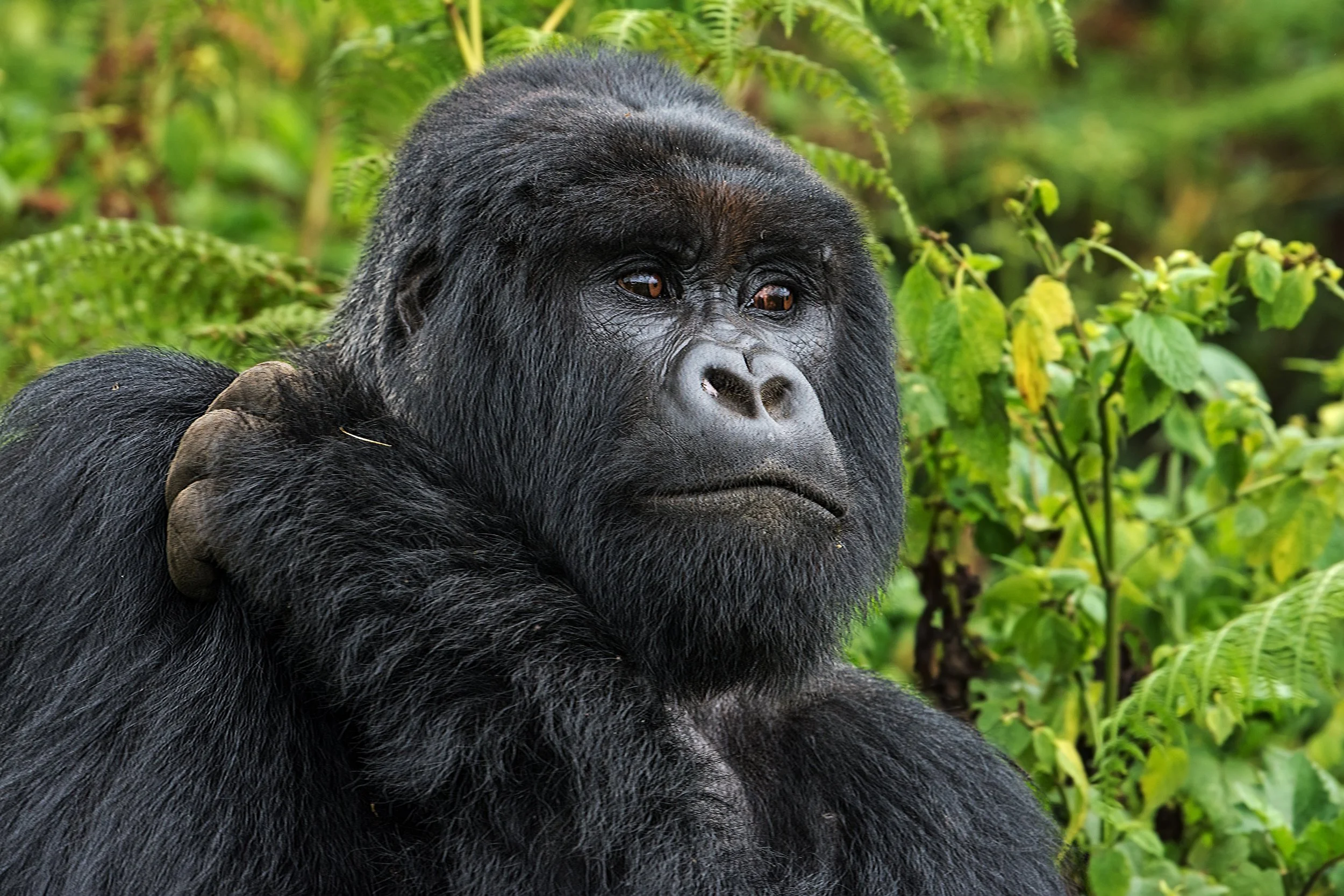
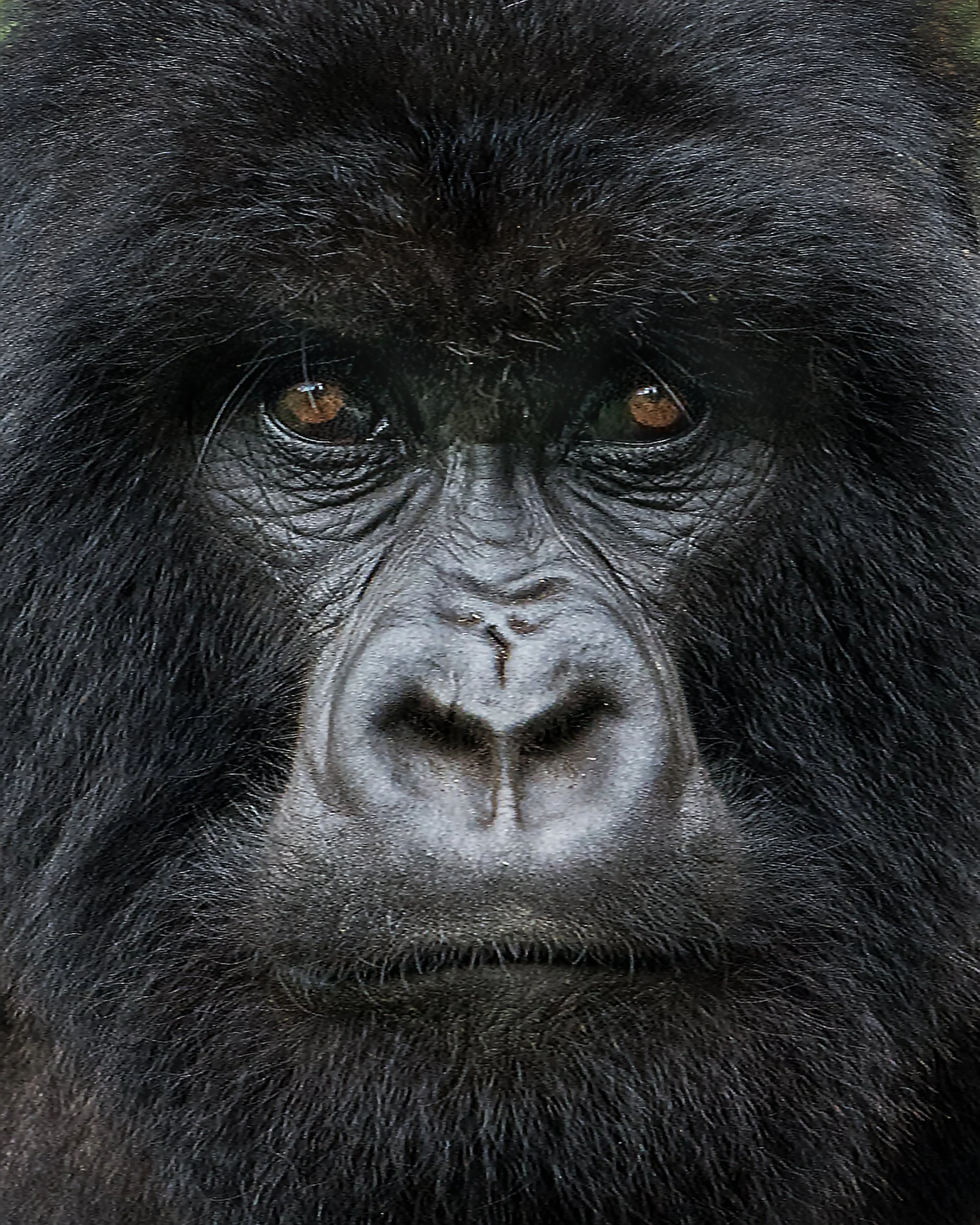
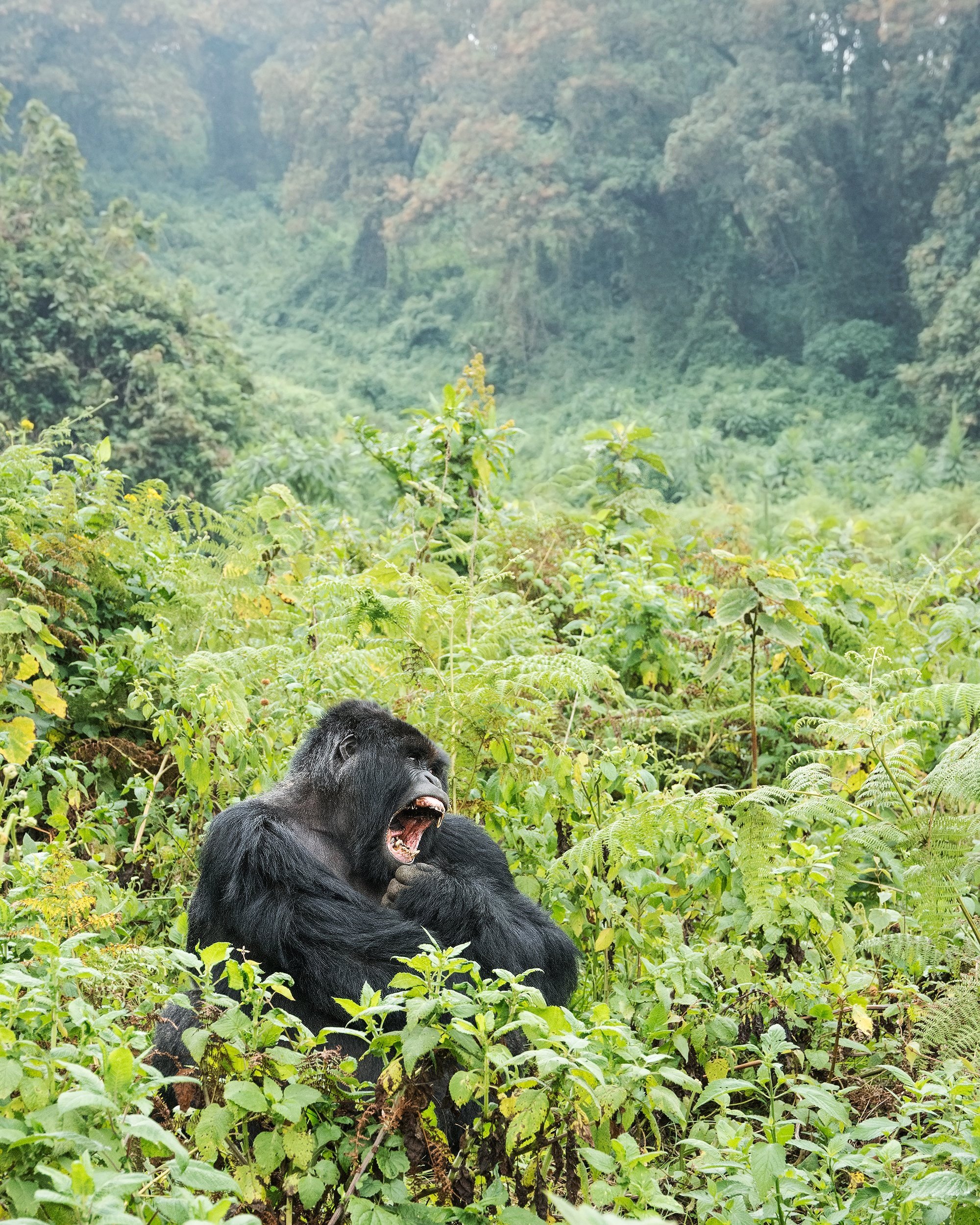
Not even known to science until 1902, mountain gorillas live only in the Virunga Mountains straddling the DRC, Rwanda, and a small segment of Uganda, with a separate population inhabiting Uganda’s Bwindi Impenetrable Forest. With only about 1,000 of them left in existence, the mountain gorilla is classified as “Endangered” on the IUCN (International Union for Conservation of Nature) Red List.
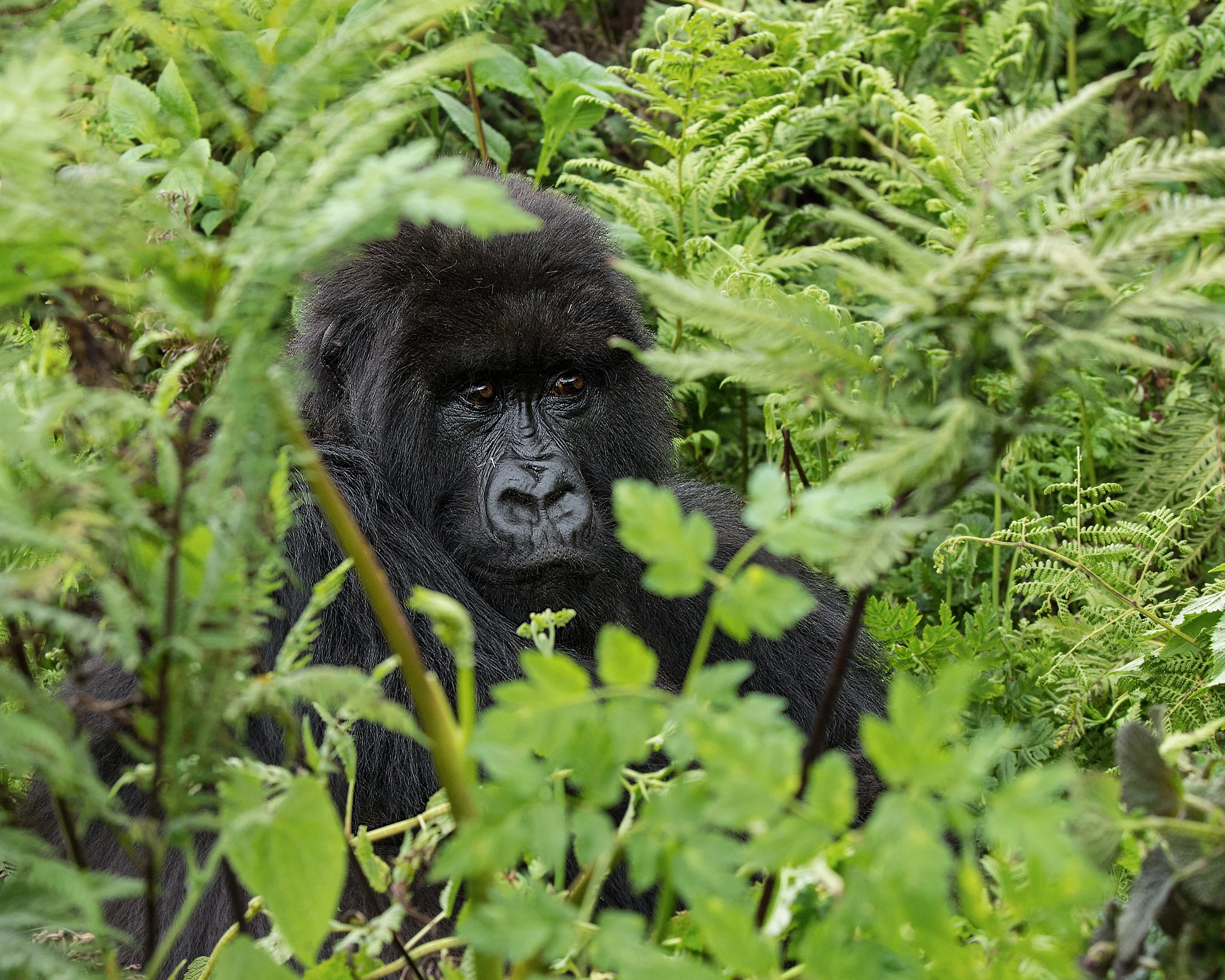
The first time I saw mountain gorillas, I was mesmerized by how human they seemed. Each member of the troop had a distinct personality. Some were outgoing, some were shy, and one, a young female who was sitting by herself off to the side with her arms firmly crossed against her chest, actually struck me as melancholy – or maybe she was just sulking like so many human teenagers do. More than anything, they struck me as tremendously gentle creatures, despite their immense size.
If you’ve seen a gorilla in a zoo, it probably was the smaller and sleeker western lowland gorilla. It certainly wasn’t a mountain gorilla; no mountain gorilla has ever been able to survive in captivity. The only way to see a mountain gorilla is to find it in the wild. And when you do, you likely will encounter other singular creatures as well, for this lush land has more endemic species than any other place in Africa.
Unfortunately, volcanoes are not the only cause of upheaval in this part of the world. The entire region is awash in poverty, and these mountain ridges have long been powder kegs of political turmoil and unfathomable human violence. War and famine have, in the past, made the protection of wildlife a secondary concern. The DRC’s Virunga National Park is an ecological jewel, but, as of this writing, it is too dangerous for tourists to visit.
Perhaps surprisingly, the current standard-bearer for conservation of the mountain gorilla is Rwanda, where scars of the horrific 1994 ethnic genocide, which resulted in the slaughter of up to 800,000 men, women, and children within a 100-day period, still palpably linger. Efforts to expand Volcanoes National Park and increase the positive impact of ecotourism in Rwanda currently are underway, though not without controversy. Nevertheless, the mountain gorilla, as well as the other forest-dwelling species in this place of immense beauty and turbulence, are managing, for now, to maintain a tenuous hold onto their high mountain homes.
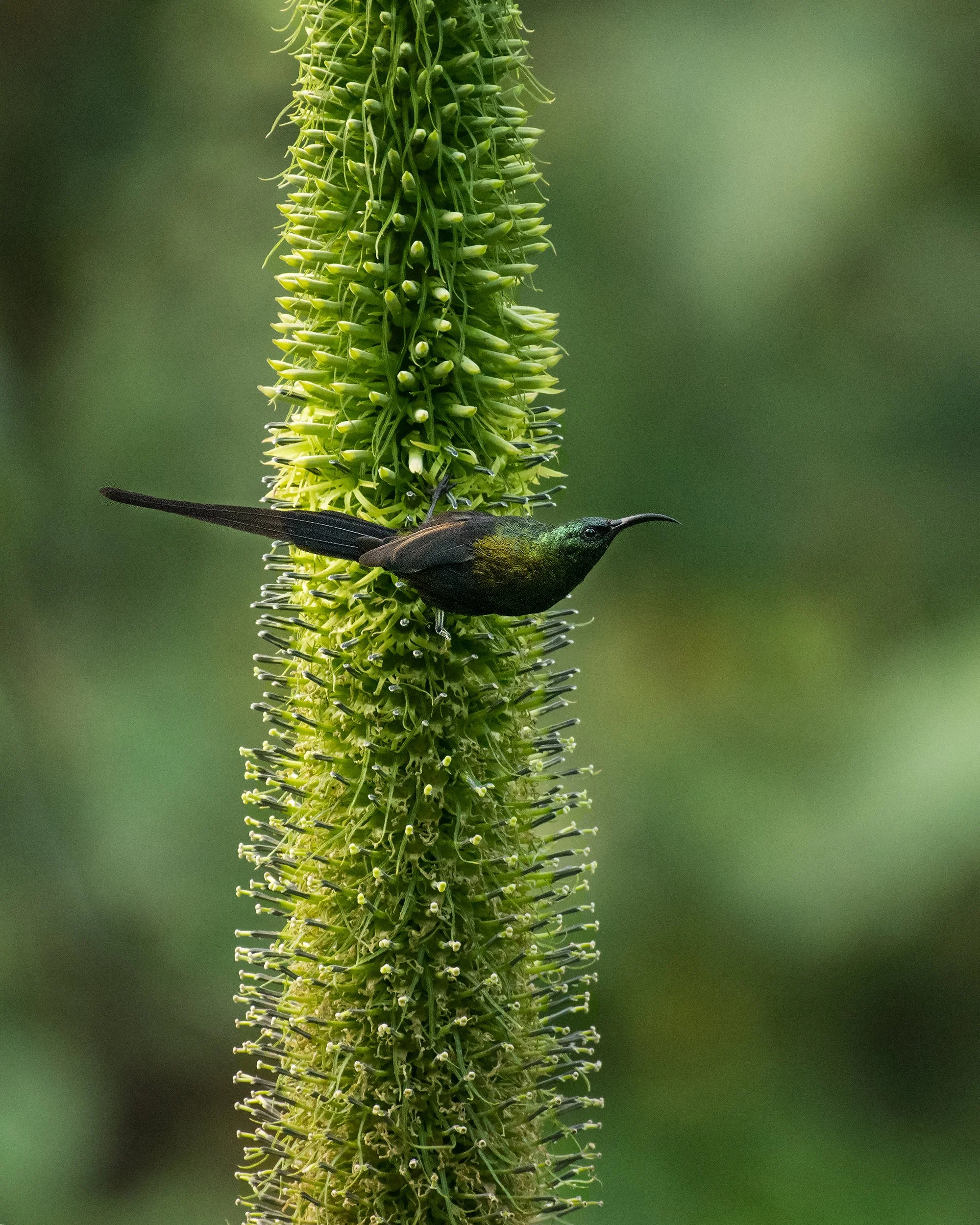
Bronze Sunbird
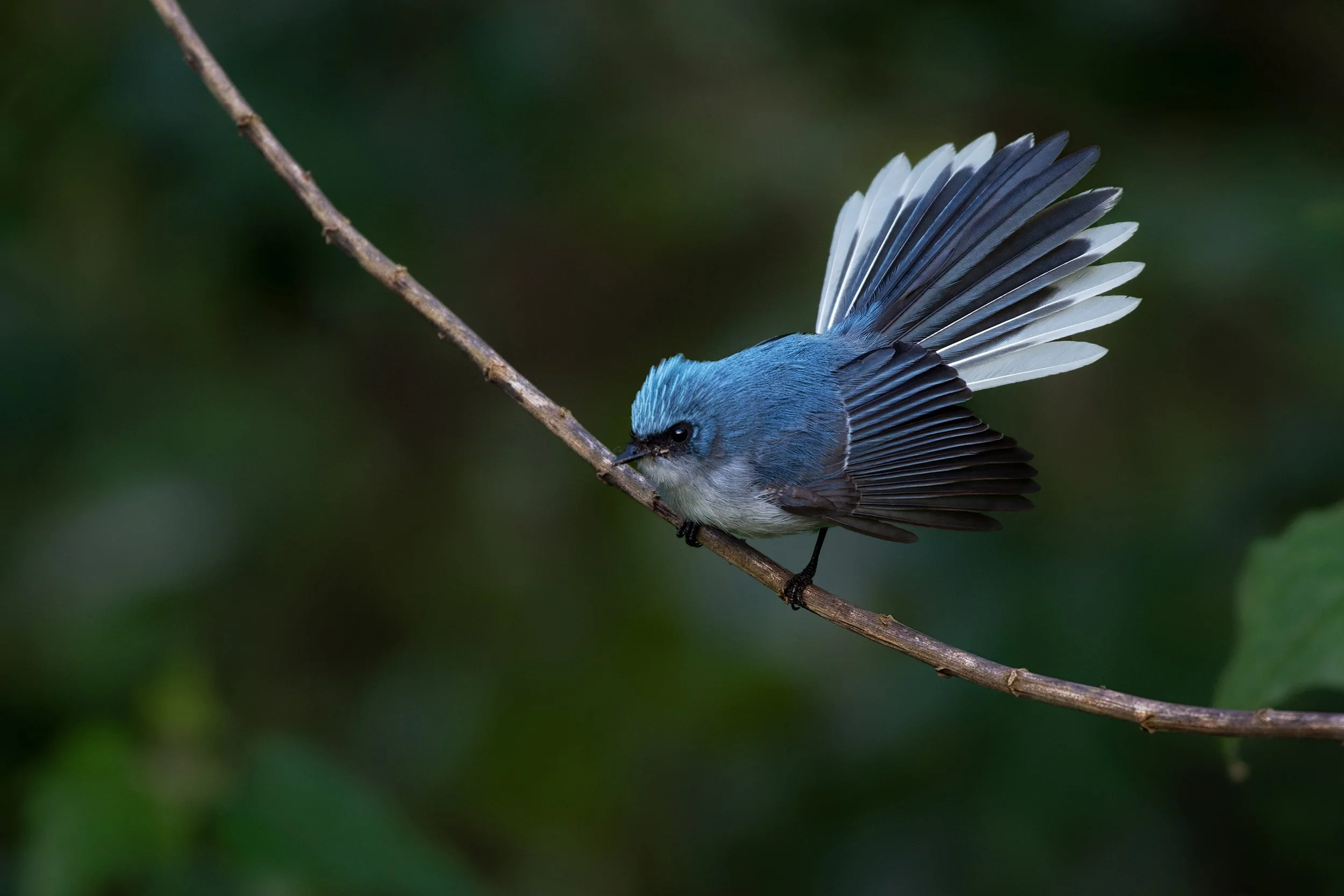
White-tailed Blue Flycatcher
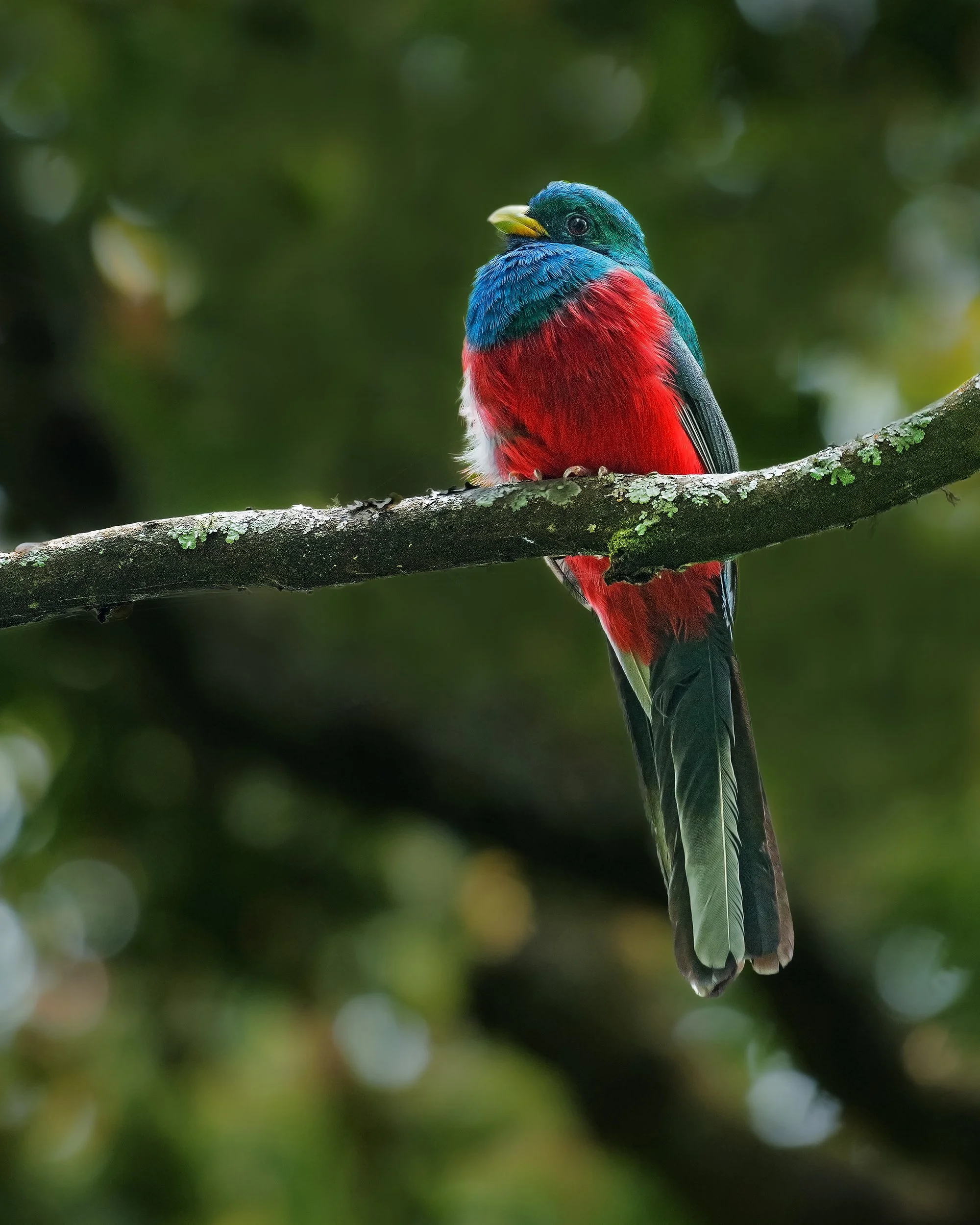
Narina Trogon (male)

Coarse Chameleon
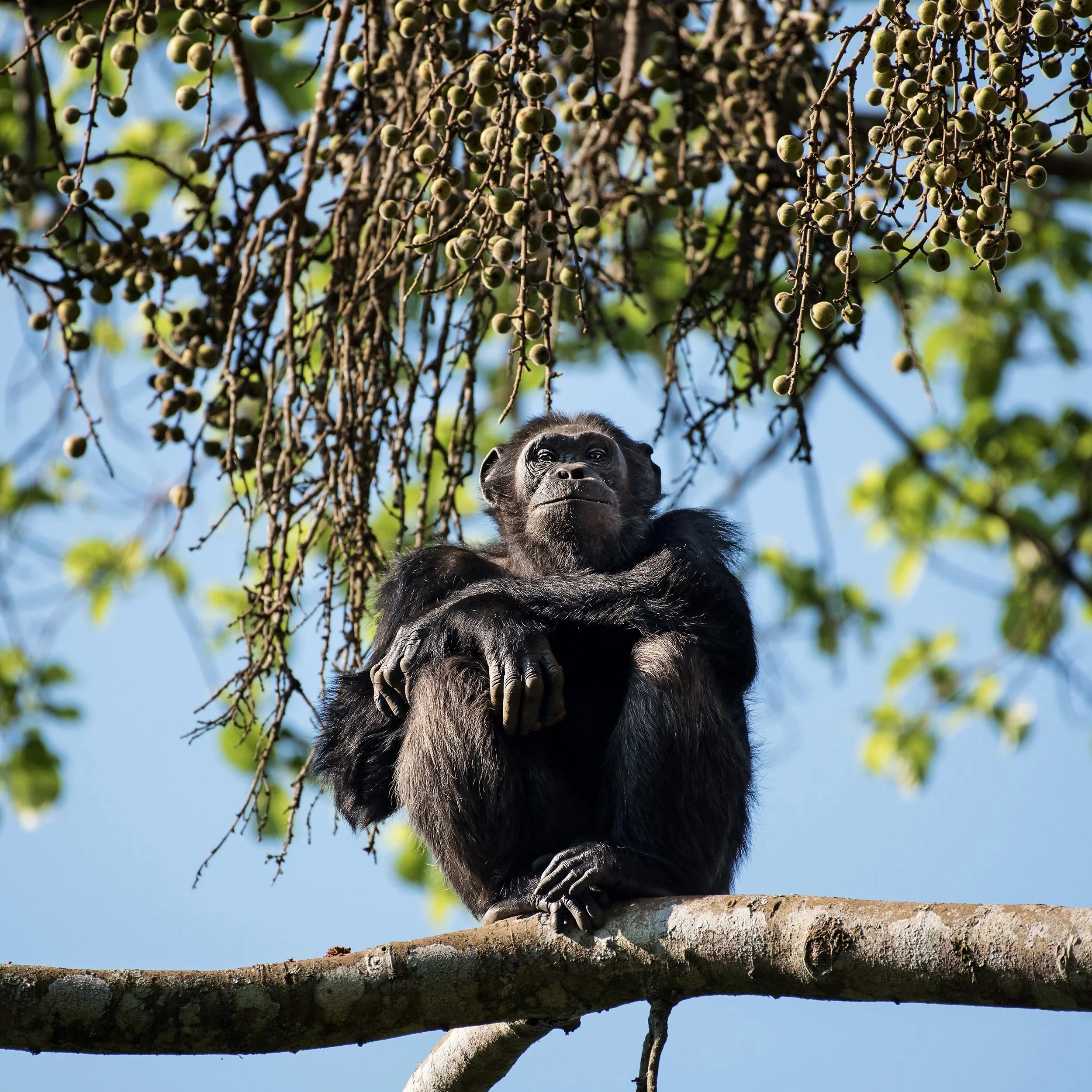
Chimpanzee
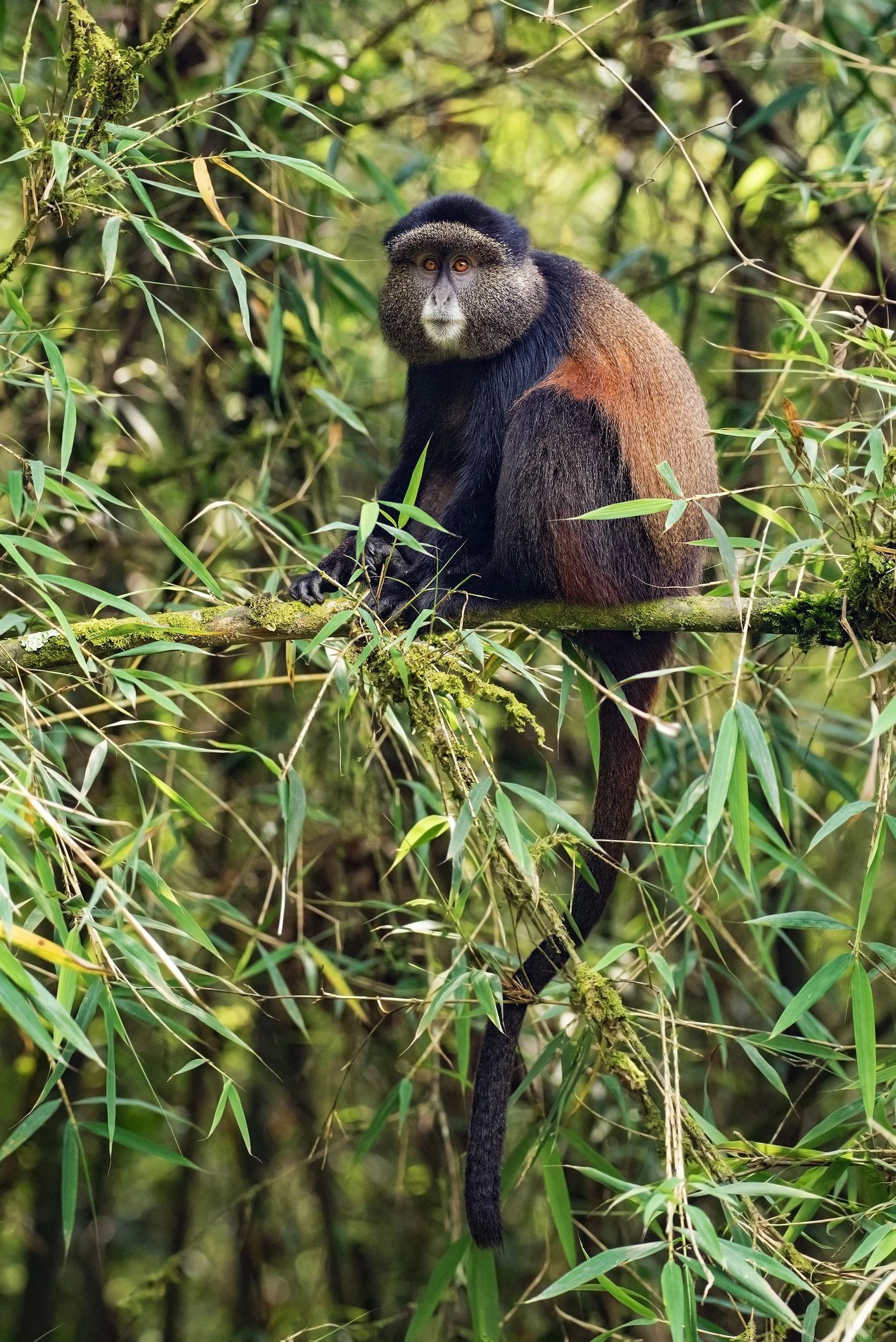
Golden Monkey
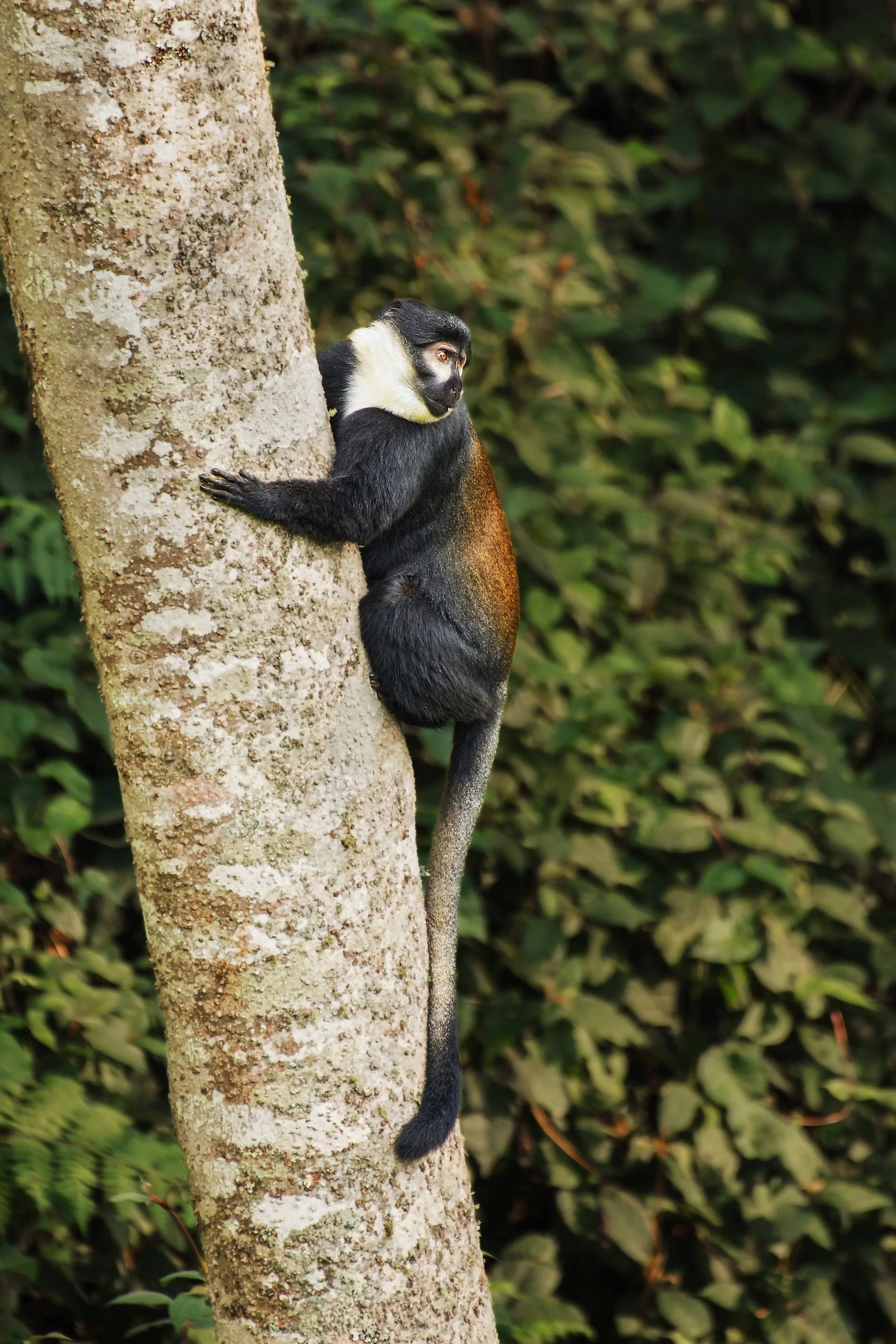
L'Hoest's Monkey