Beautiful Darkness
I’ve always traveled with specific photographic goals in mind. Rwanda for mountain gorillas. The Pantanal in Brazil for jaguars. Amboseli National Park in Kenya for elephants.
But for our trip to Kenya in February 2025, I notched things up a bit. My target for this expedition was a melanistic, or black, leopard that routinely had been seen in Laikipia County in northern Kenya. Not black leopards (plural), because one doesn’t just go out and look for black leopards. They’re too rare. No, in this case, my aim was to see not just a particular species (melanistic leopards and regular “spotted” leopards are all the same species, incidentally), but one specific, individual animal.
Her name is Giza Mrembo (“Beautiful Darkness” in Swahili).
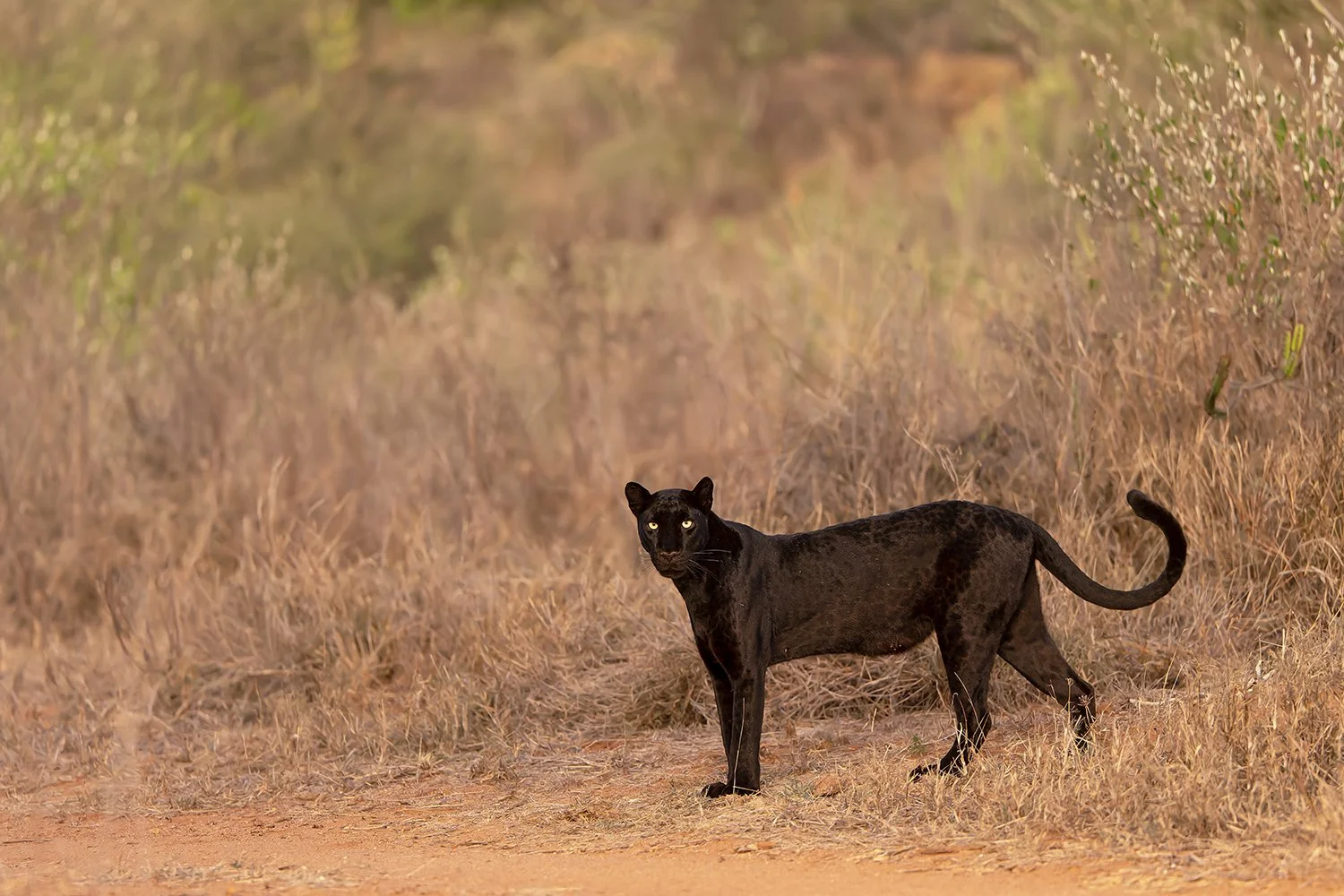
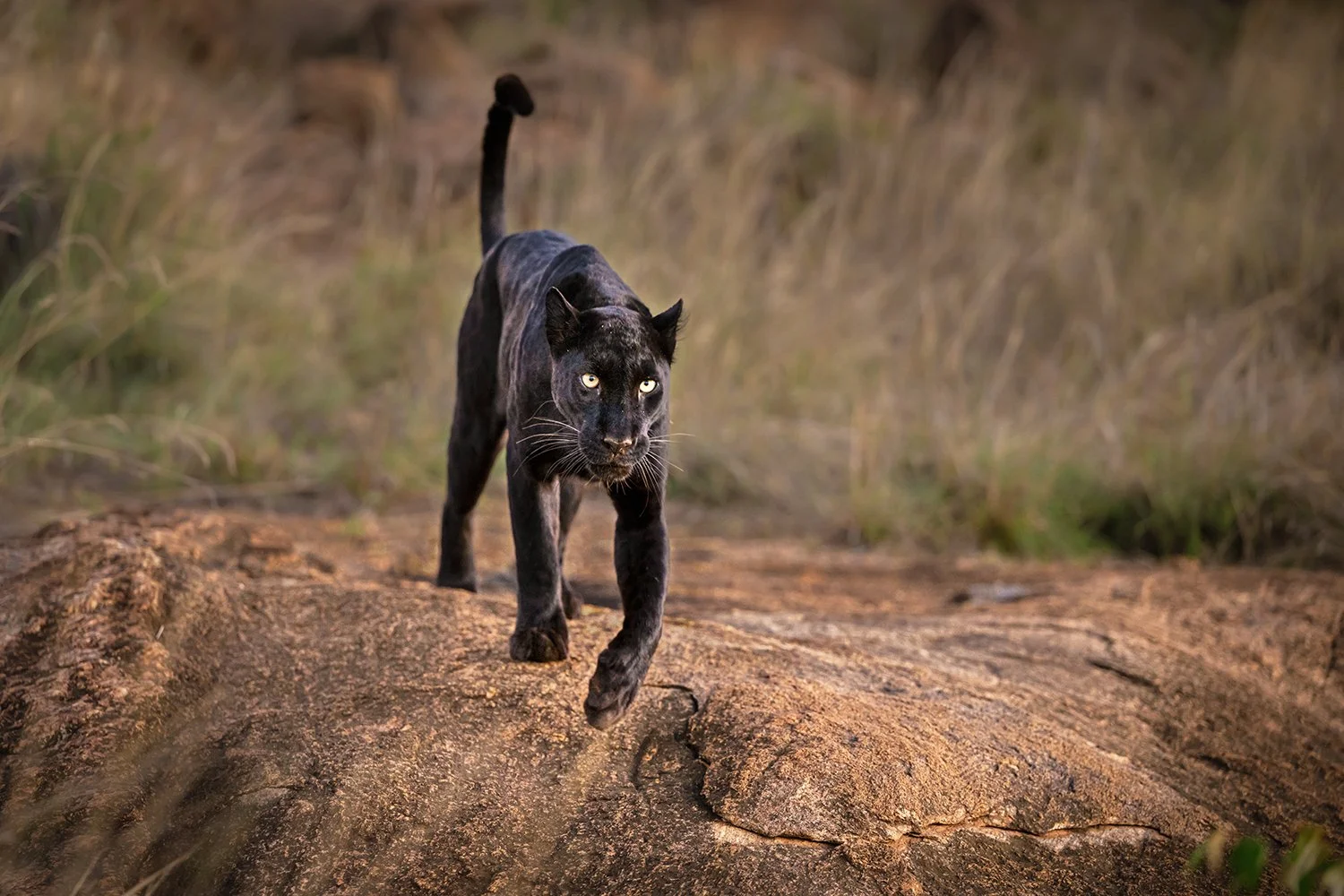
Melanism in leopards is caused by a genetic trait that produces an excess of melanin, or pigmentation, which makes their coats appear black. If you look closely, though, in certain light you can see that they still have the typical rosettes that figure so prominently in the species. Those rosettes are just more obscured by their darker pigmentation.
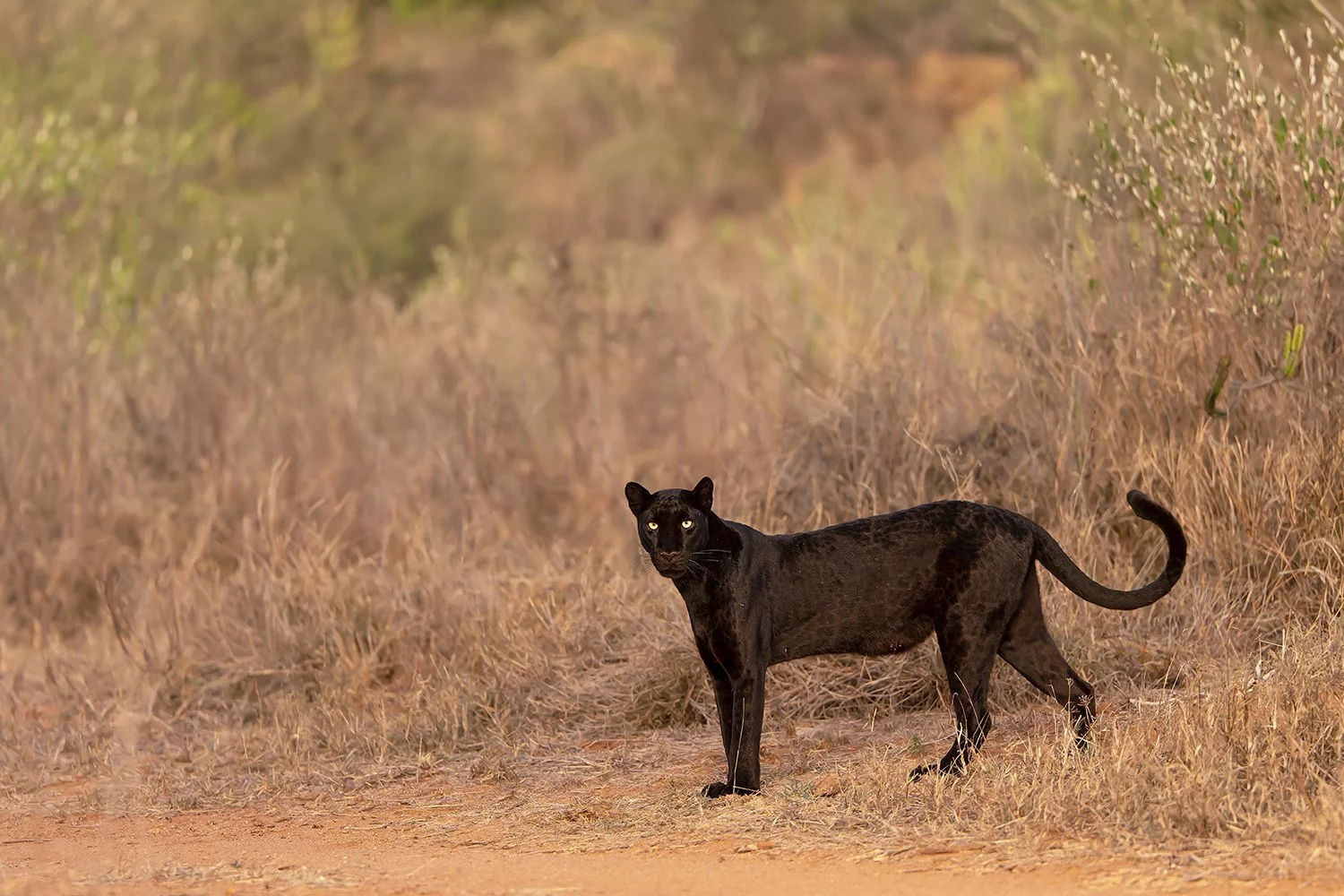
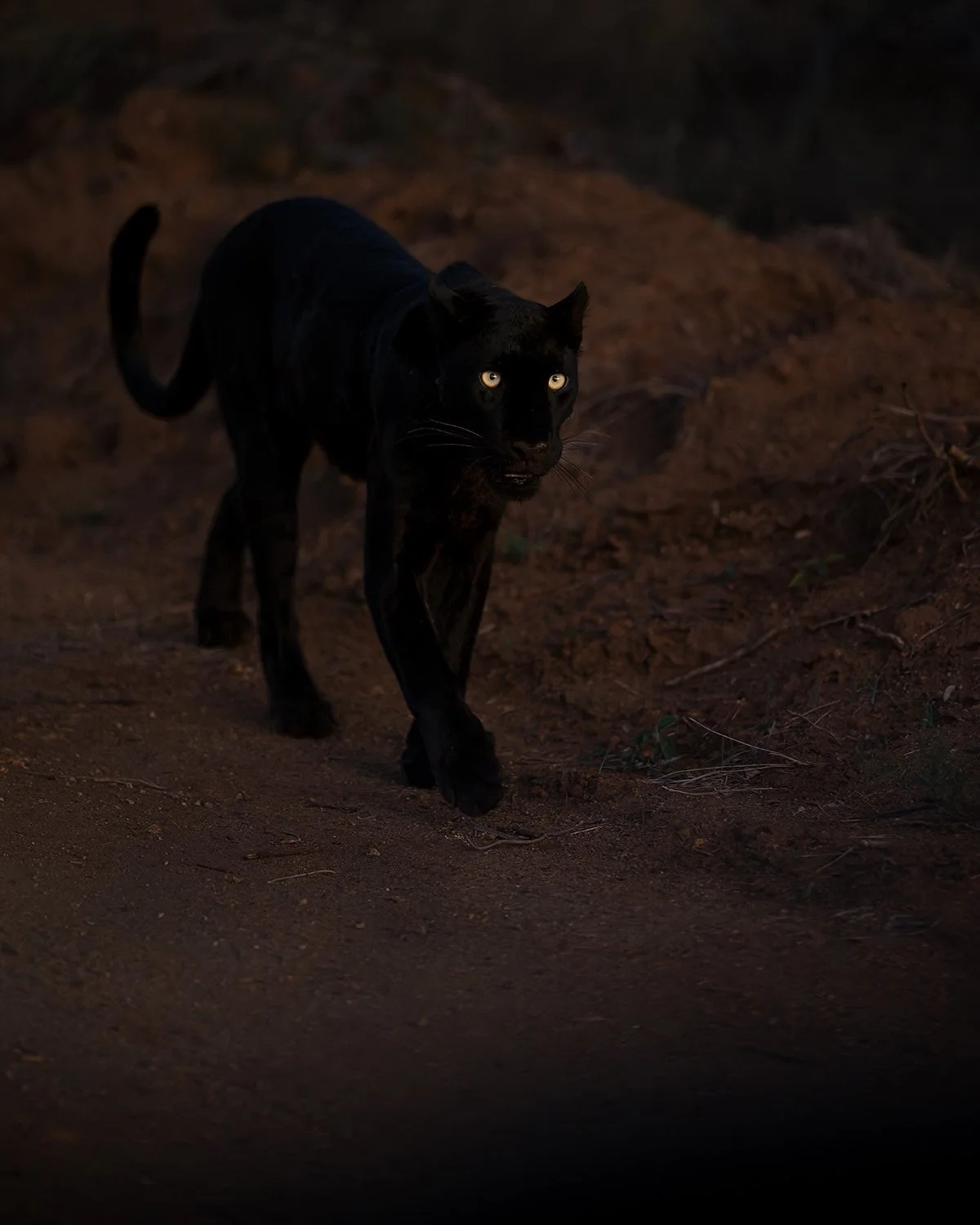
Giza Mrembo, a rare melanistic African leopard. If you look closely at her lower torso and hind leg, you can see the rosettes that are present on all leopards.
The reason melanistic leopards (sometimes referred to as “black panthers”) are so rare is that the gene that causes this trait is recessive. Both parents must carry this recessive gene in order for any of their offspring to be melanistic, and even then, there is only a 25% chance that a cub will be born with the trait. If either one of the parents lacks this recessive gene, then none of their cubs will be melanistic.
A leopard does not have to be melanistic herself in order to give birth to a melanistic cub. She only has to carry the recessive gene (and for her partner to carry the recessive gene as well). Although we do not know the identity of Giza’s father, we do know that her mother was a regular spotted leopard.
Likewise, a melanistic leopard will not necessarily give birth to melanistic cubs, even if her partner also carries the gene for melanism. Giza’s first litter of two cubs were born in late 2024, and they (a male and a female) are both spotted. The suspected father of these cubs is also spotted, but we do not know if he carries the gene for melanism. If he does not, then that is the end of the line for Giza’s melanism to be passed on, unless she mates in the future with a different male who also carries the gene.
An additional challenge for leopards born melanistic is that their relative lack of camouflage on the open savanna makes them more susceptible to predators. Even if a melanistic cub beats the odds and survives into adulthood, this lack of camouflage makes it more difficult for them to hunt, as the leopard’s technique is to stalk and then surprise its prey.
In other words, it’s rare enough for a leopard cub to be born melanistic, let alone survive very long. In fact, seeing a melanistic African leopard in the wild is so rare that it was not until just a few years that we were able to see high-quality photographs of one for the first time. Before then, black leopards were essentially the African version of the Loch Ness Monster. You’d hear about one every now and then, but nothing definitive could be verified.
However, in 2019 reports of black leopard sightings began to surface in the Laikipia region of northern Kenya, including at Laikipia Wilderness Camp (LWC), a high-quality safari lodge. Working with the owner of LWC, the British wildlife photographer Will Burrard-Lucas set out a series of camera traps and eventually was able to record a number of spectacular photos of a male melanistic leopard that he nicknamed “Blackie.”
Over the next few years, there were reports of at least 3 different melanistic leopards in this region, but sightings of these naturally shy, elusive cats were sporadic and often lasted just seconds. That all changed in 2021, when a very relaxed spotted female whose territory included LWC gave birth to a litter of cubs, including a small female who was melanistic. Staff at LWC named her Giza Mrembo (“Beautiful Darkness”).
Today, Giza probably is the most famous leopard in the world. A rarity when she was born, she defied expectations and grew into adulthood. Despite her small stature, she overcame early weakness by adapting and then perfecting her hunting techniques, becoming more nocturnal and stalking her prey under cover of darkness to compensate for her lack of camouflage during the day. The fact that she was able to raise both cubs from her first litter into adulthood is a testament to her instinct for survival.
If that isn’t enough, what makes Giza particularly special is that, having lived her entire life less than one kilometer from a busy safari camp, she is completely comfortable with and unfazed by the presence of safari vehicles. As a result, once you find her, it is a fairly easy enterprise to photograph her.
We were extremely fortunate to find Giza on 3 of our 4 nights at LWC. As she was still nursing her cubs at the time (hidden away in a den somewhere nearby), she had to hunt almost every night and had established a routine that increased our chances of locating her.
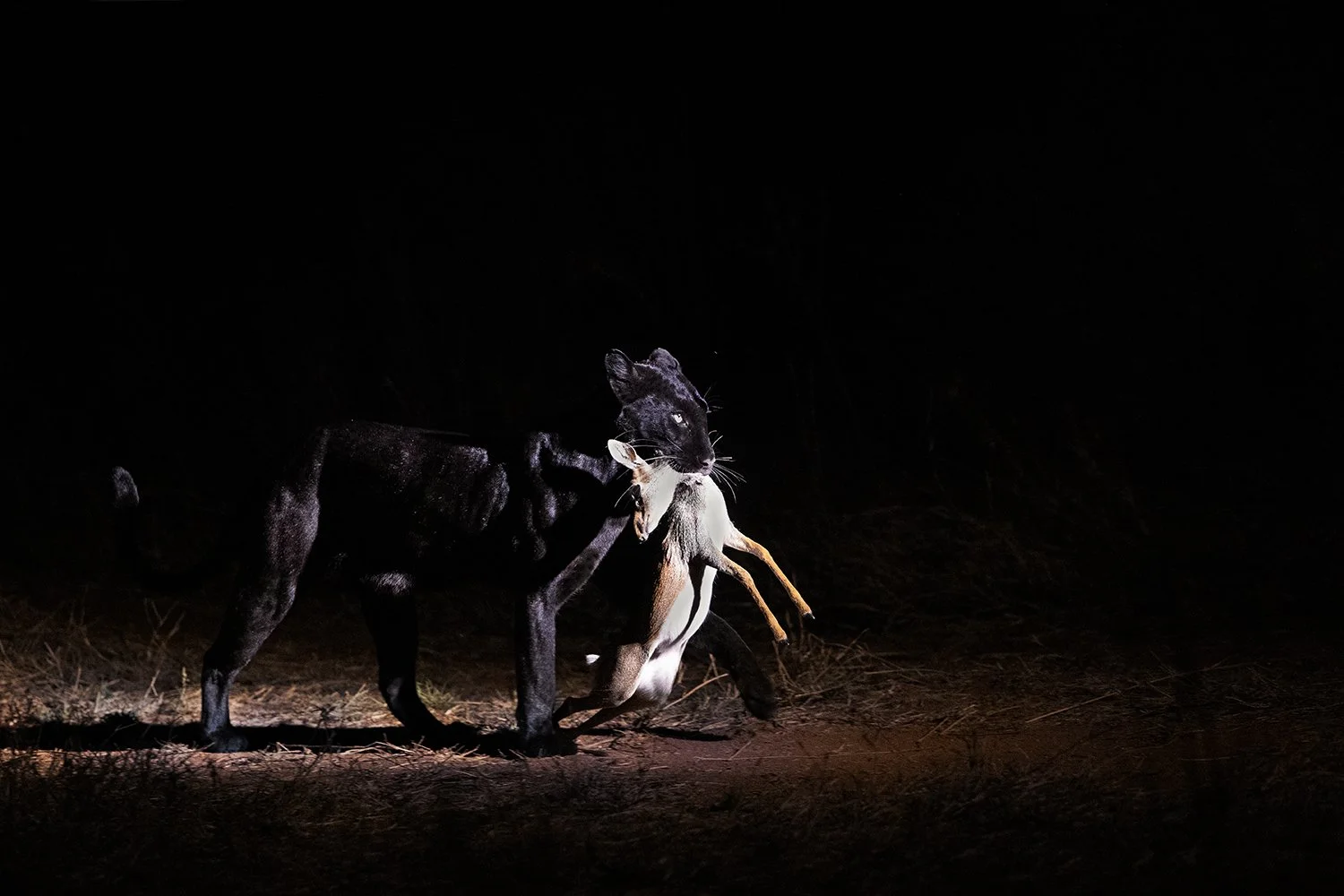
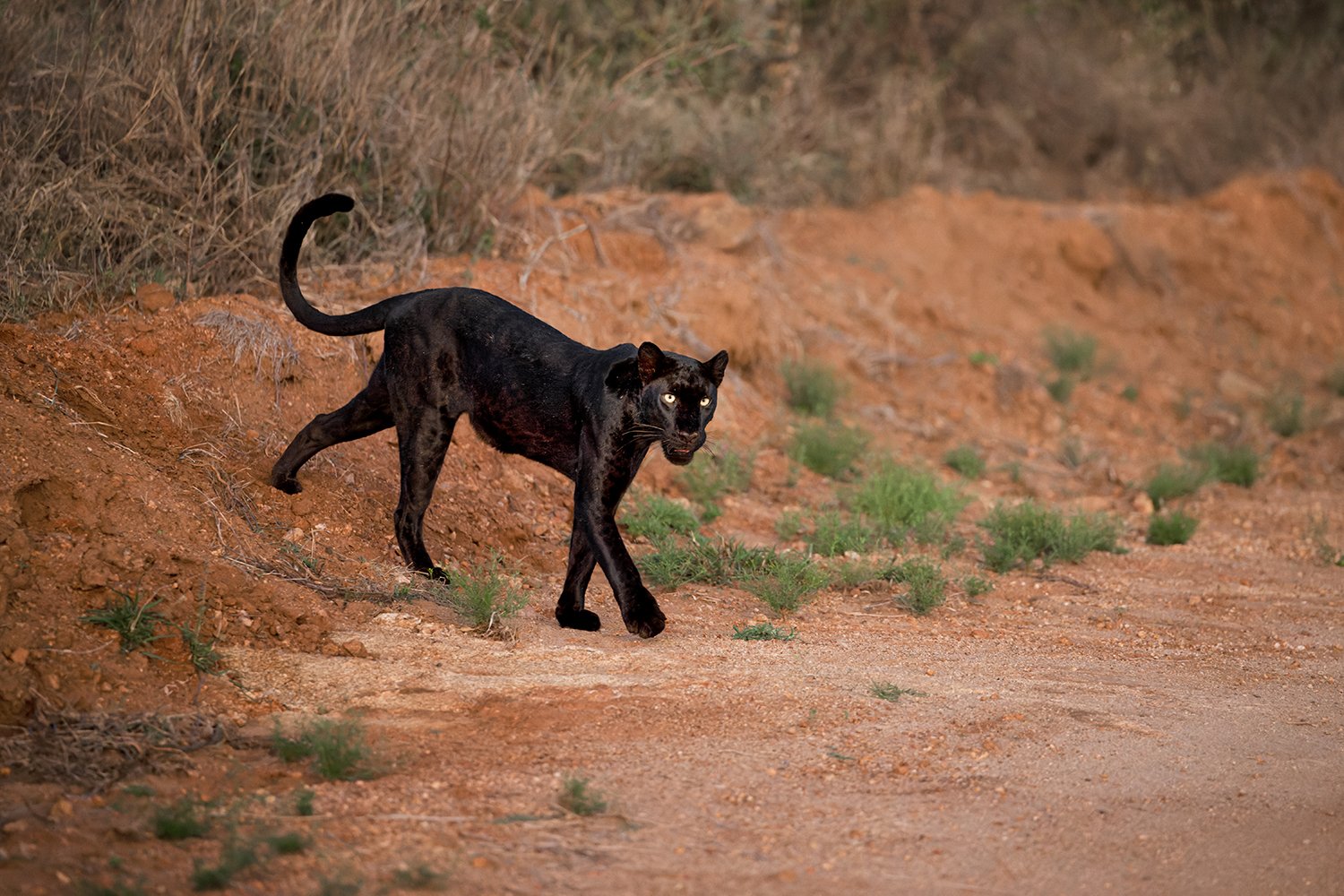
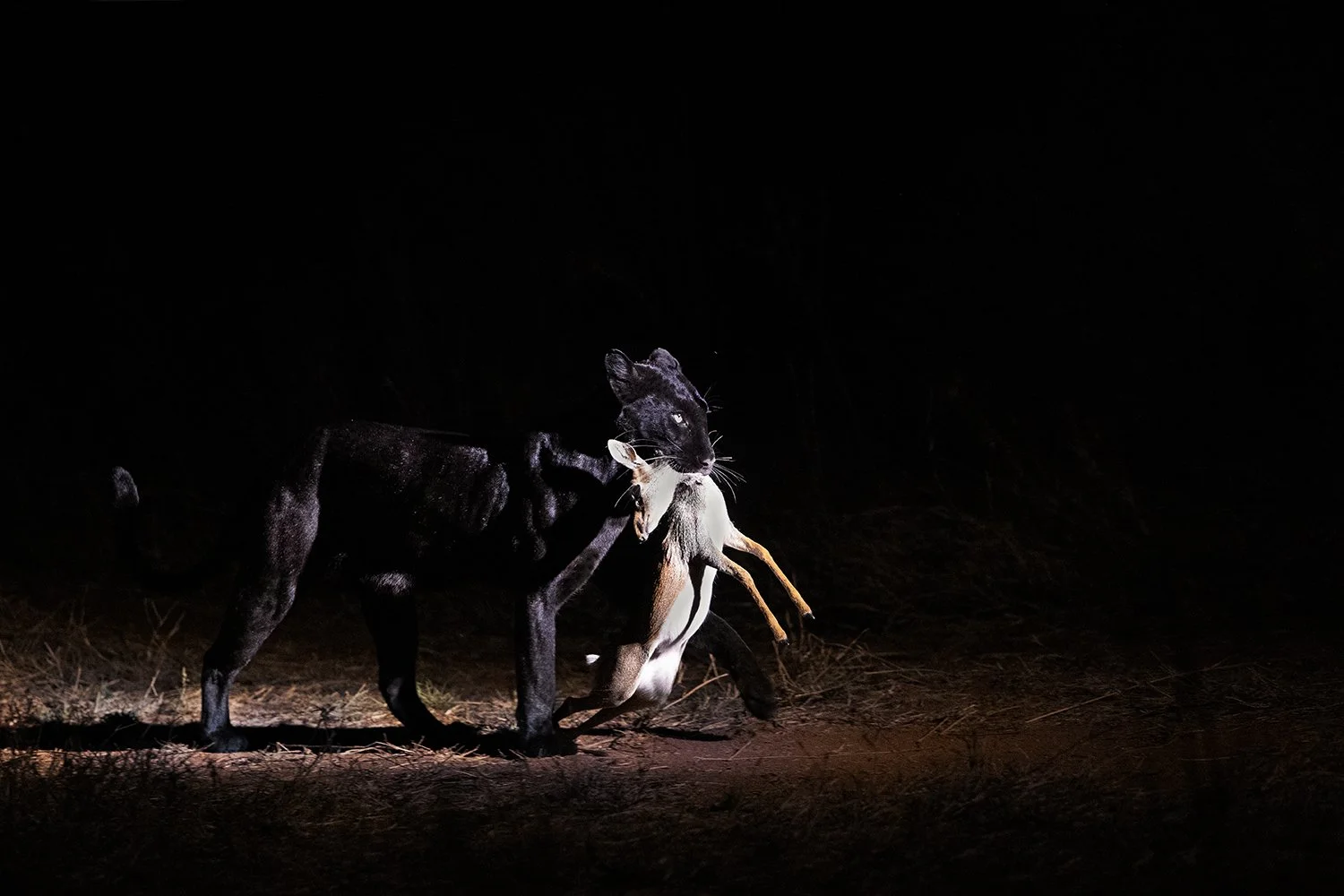
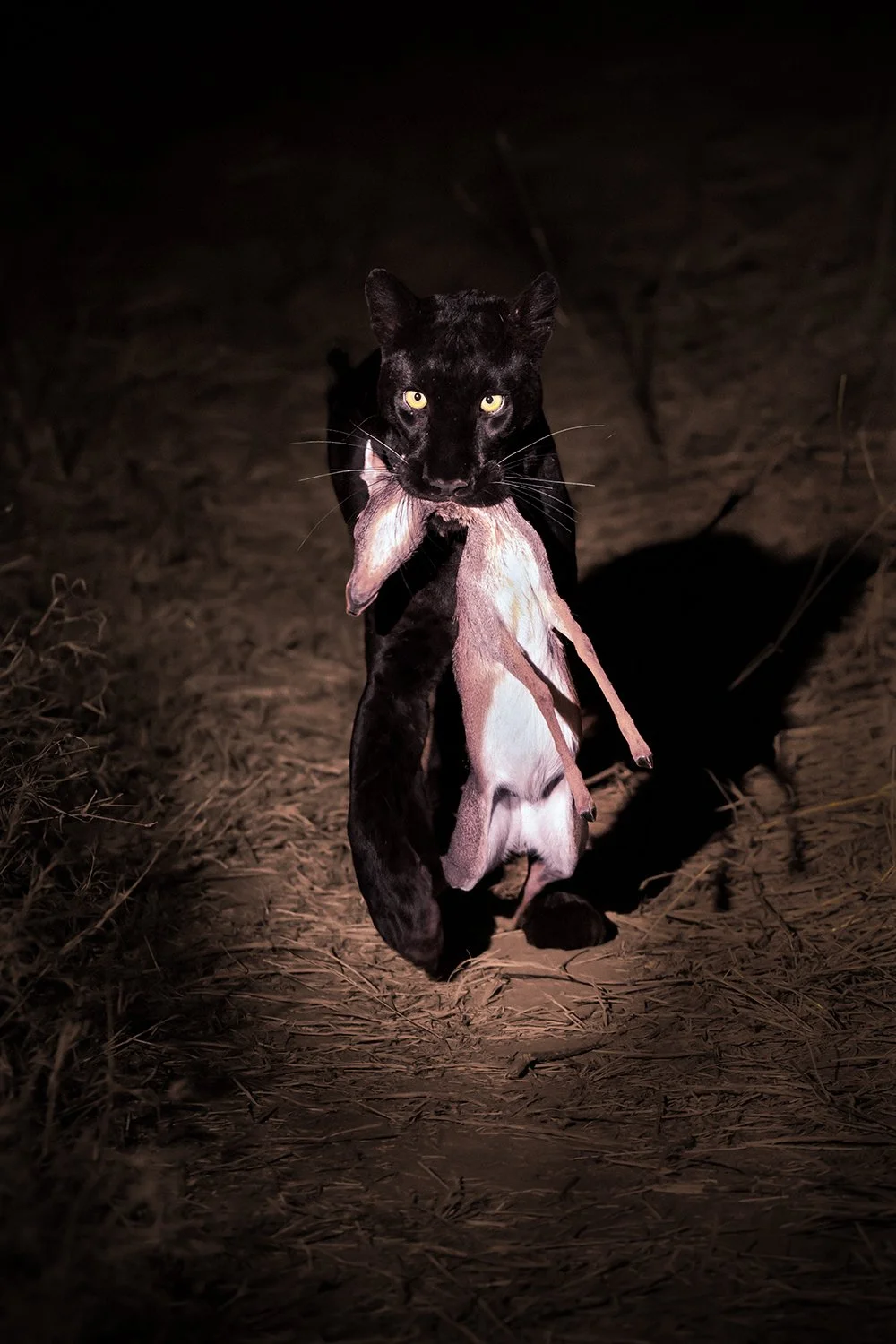
In the end, I captured photos of her stalking at dusk, before the sun had completely set, as well as at night following a successful hunt (of a Gunther’s Dik-dik, a small antelope).
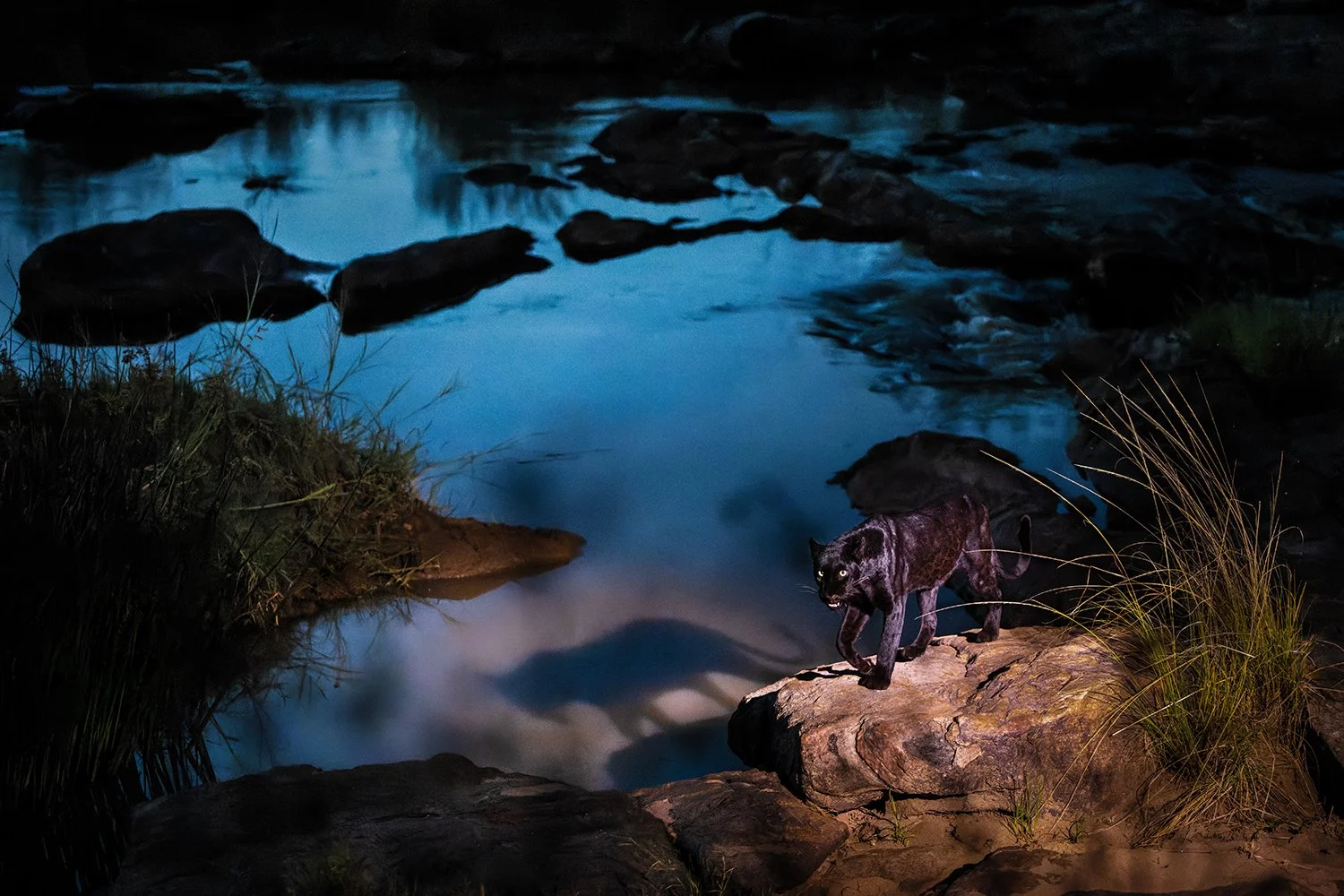
On our final night, Giza meandered down to the Ewaso Narok River to quench her thirst, and as she began to make her way back up, I took a wider-angle photograph of her skulking along the riverbank, a spotlight illuminating her and casting her dark shadow against the water, a suitable parting metaphor for this sleek, silent, and solitary creature, as beautiful as she is rare.