“My” Bear
Sometimes the stars just align.
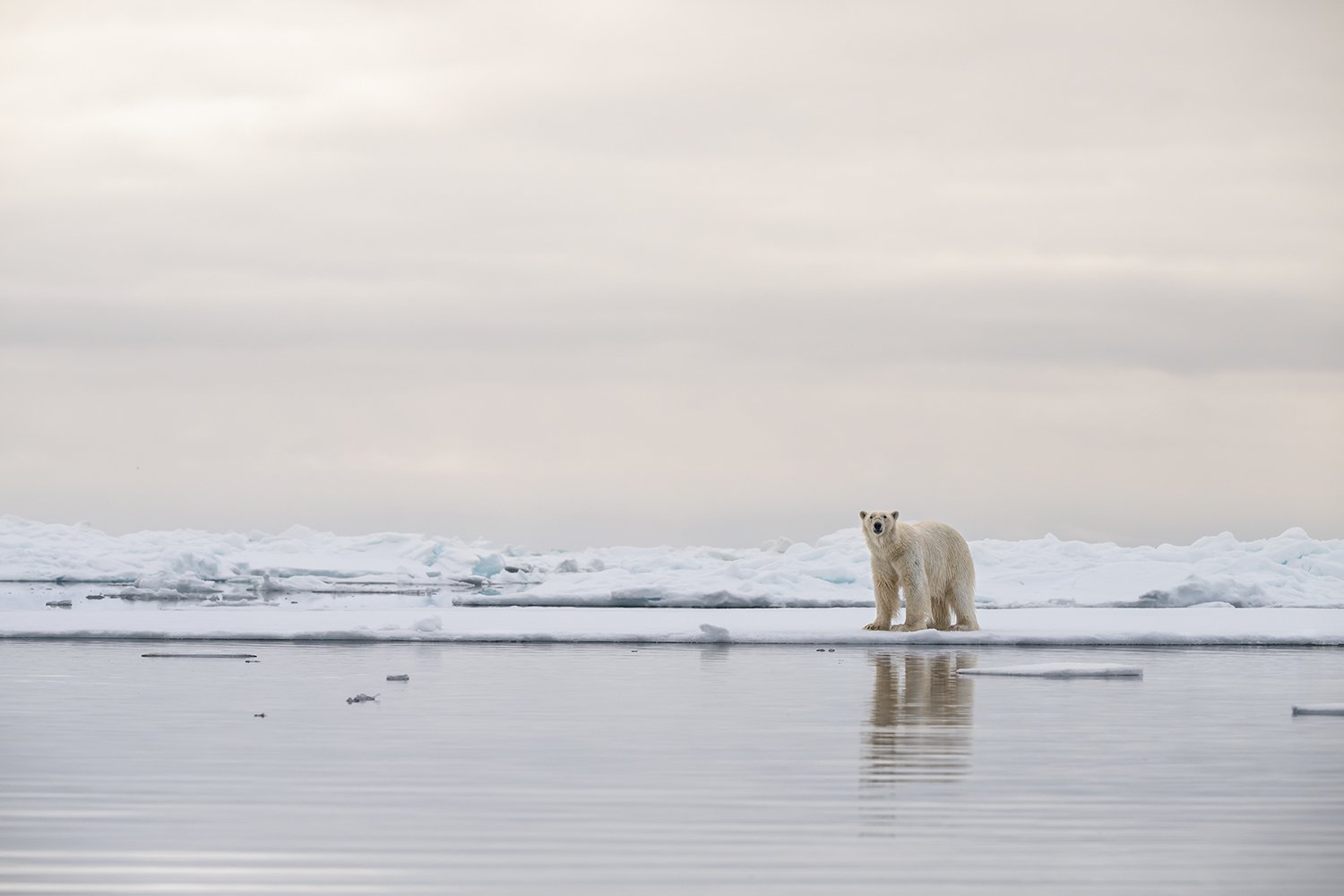
I was sitting at the desk in my small state room aboard the M/S Freya, a high ice-class Swedish expedition ship I was sailing on during an 18-day tour north of Svalbard, an archipelago of islands in the Arctic Circle north of Norway. The purpose of this trip, led by Australian photographer Joshua Holko, was to search for polar bears in the pack ice of the Arctic Ocean and Barents Sea, and with only 3 days left on our journey, we had enjoyed some unforgettable sights – 17 polar bears thus far. Little did I know that our 18th, and final, polar bear would end up being one of the most memorable.
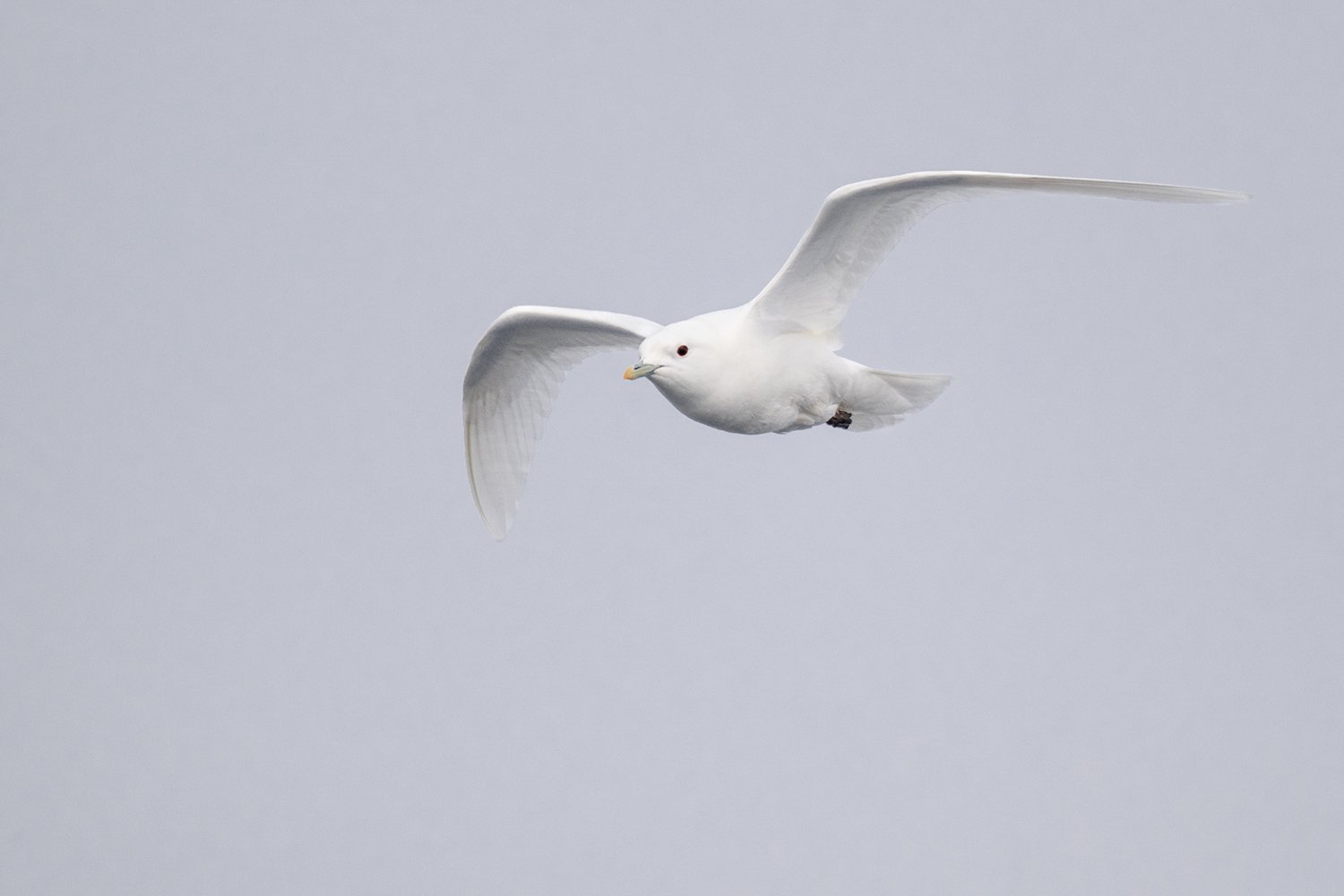
I was working at my laptop computer, scrolling through some photos I’d made earlier that day of Ivory Gulls, a graceful, pure white specialty of the Arctic and one of the few birds that does not migrate south once the sun disappears for 6 months.
Two flights above, Josh and our two guides, Yves Adams from Belgium and Timo Virmavirta from Finland, would take turns on the bridge looking out for polar bears. At least one or two guests, if not more, often would join them in the search. I myself had spent a part of that morning up there. If a bear were sighted, an alert would then be sent ship-wide.
We had been at sea for several hours, so it had been a quiet afternoon, but increasingly, the ship began hitting chunks of ice, so periodically I would stand and look out my porthole to see if there might be anything of interest to draw me out onto the deck with my camera.
Twice I’d stood up and peered out. A small flock of black-legged kittiwakes had started following the ship, feasting on small fish hiding below the drift ice that was breaking up as we plowed through the inky black water.
Ka-chunk. The ship hit another piece of ice, and I stood and peeked out my window again; only this time, I was met by another pair of eyes. I did a double-take, grabbed my binoculars, and looked again.
A polar bear in the ice!
But why had an alert from the bridge not gone out?
I ran through the ship’s corridor. In the lounge, several of the other photographer guests sat on banquettes, reading or reviewing photos. “I just saw a bear out my window!” I said, running past them. They just looked at me quizzically, without a word.
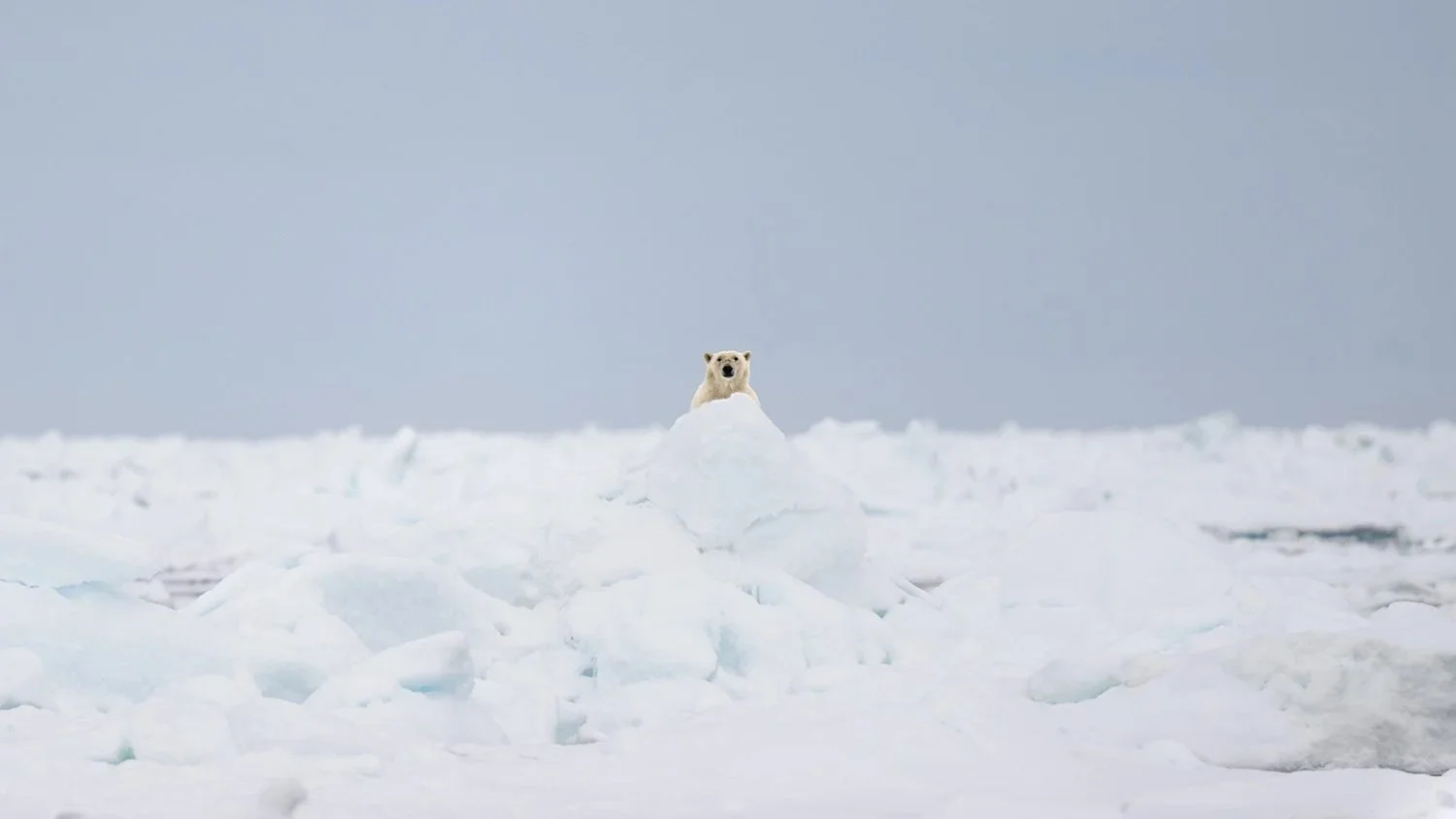
I ran onward, out the door onto the deck, and there was the bear, its head just above the shards of sea ice, staring at the ship. Timo, our Finnish guide, was the only other person outside, and he was at the back of the ship with his camera.
I ran toward him. “Do you have the bear?”
He gazed at me with a puzzled look. He’d been photographing the kittiwakes in flight. “Bear?” he asked.
“Yes!” I said, incredulously. He gazed at me, dumbfounded. “Right there!” I exclaimed, pointing at the bear to my left.
His eyes grew wide. “It’s a bear!” he said, almost breathlessly.
“Yes, I know!” And this is the point when I realized that I was the only person on the ship who had spied the bear.
With that, I dashed back inside and somehow managed to run up the two flights of narrow steps to the bridge in my bulky Arctic muck boots without tripping.
“Bear! There’s a bear!” I exclaimed as I made my way onto the bridge, where peace and calm prevailed. The captain and his first assistant were at the controls, and Josh and Yves, and two of my fellow guests, were all peering out the wide expanse of windows with high-powered binoculars, looking for polar bears. They all looked at me like I was deranged.
“There! Right there!” I said, pointing down toward the ice directly below. There was a collective gasp. “Oh, my God!”
“It must have just popped up from the ice after the bow of the ship passed him, and we all missed it,” explained Yves, as the captain halted the ship and Josh ordered the crew to prepare to lower Zodiacs into the water in the hope that we could have a closer look.
By the time we had all assembled on the deck, the bear had disappeared into the jagged shards of drift ice. It would be a long shot if we could relocate him, and the Zodiacs would have to maneuver slowly through breaks in the floating ice for us to make any headway. But we all agreed that the opportunity was worth the effort.
It was a stunningly beautiful late afternoon. No wind. The sea was calm as a lake, and the sky was ethereal, a butter yellow sun only occasionally glowing through the clouds, momentarily giving the entire atmosphere a serene, limpid pallor of lilac, turquoise, and ochre pastels. The only sound we could hear was the gentle creaking of the ice as it moved in the current. We all stood in silence, not wanting to frighten off the bear if it was still around.
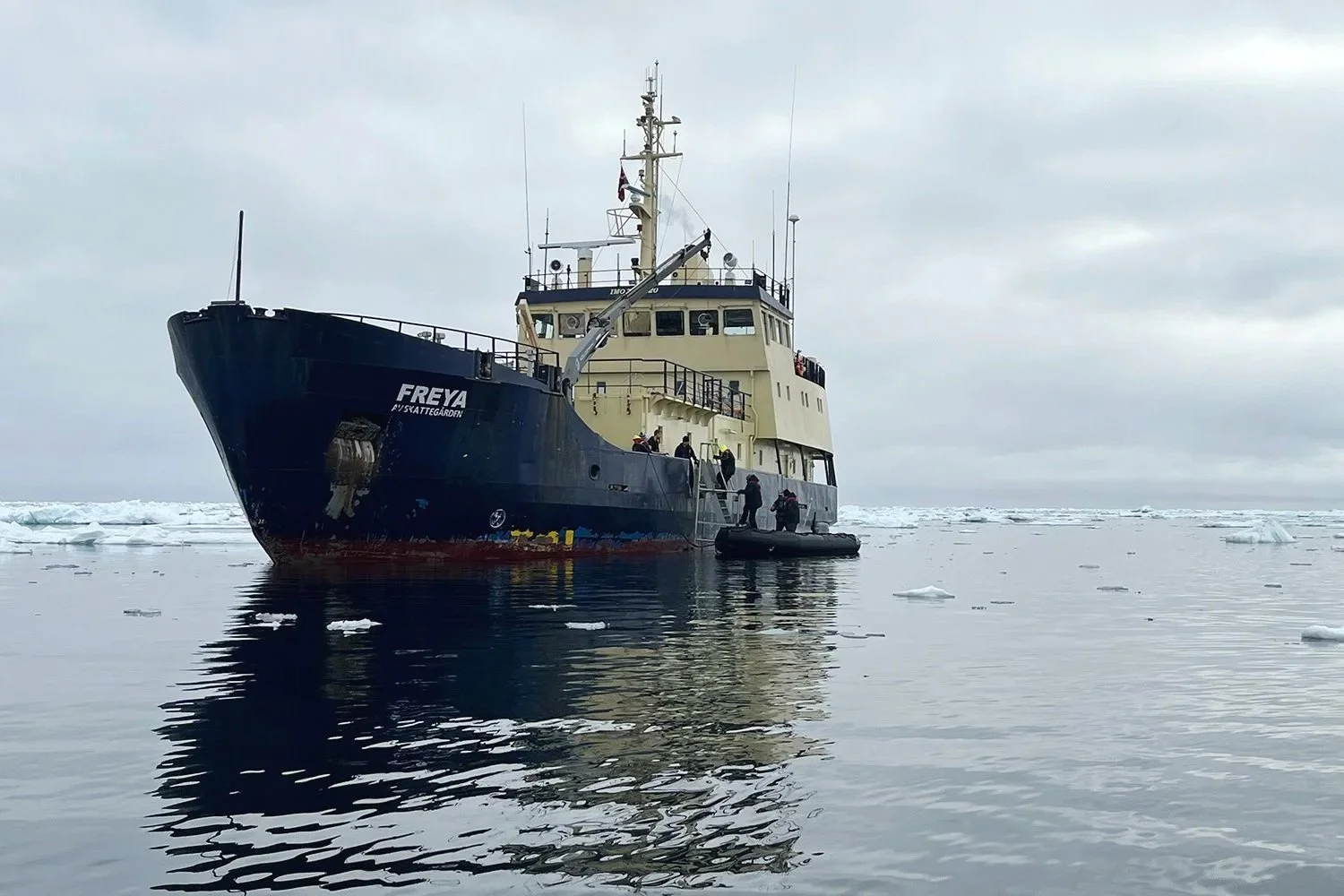
I joined Josh in the Zodiac driven by Timo. He maintained radio contact with Yves, who was piloting the other Zodiac, as we split up to search the ice pack for the bear.
It was slow going. In places, the ice was impenetrable, and any opening we might see could easily close up on us, as the ice was constantly moving. This was drift ice, an assemblage of large chunks, chards, and pieces, and it would be very easy for even a large polar bear simply to disappear into the landscape. As polar bears are expert swimmers (they are classified as marine mammals, just like whales), the bear might already have achieved a significant distance from us.
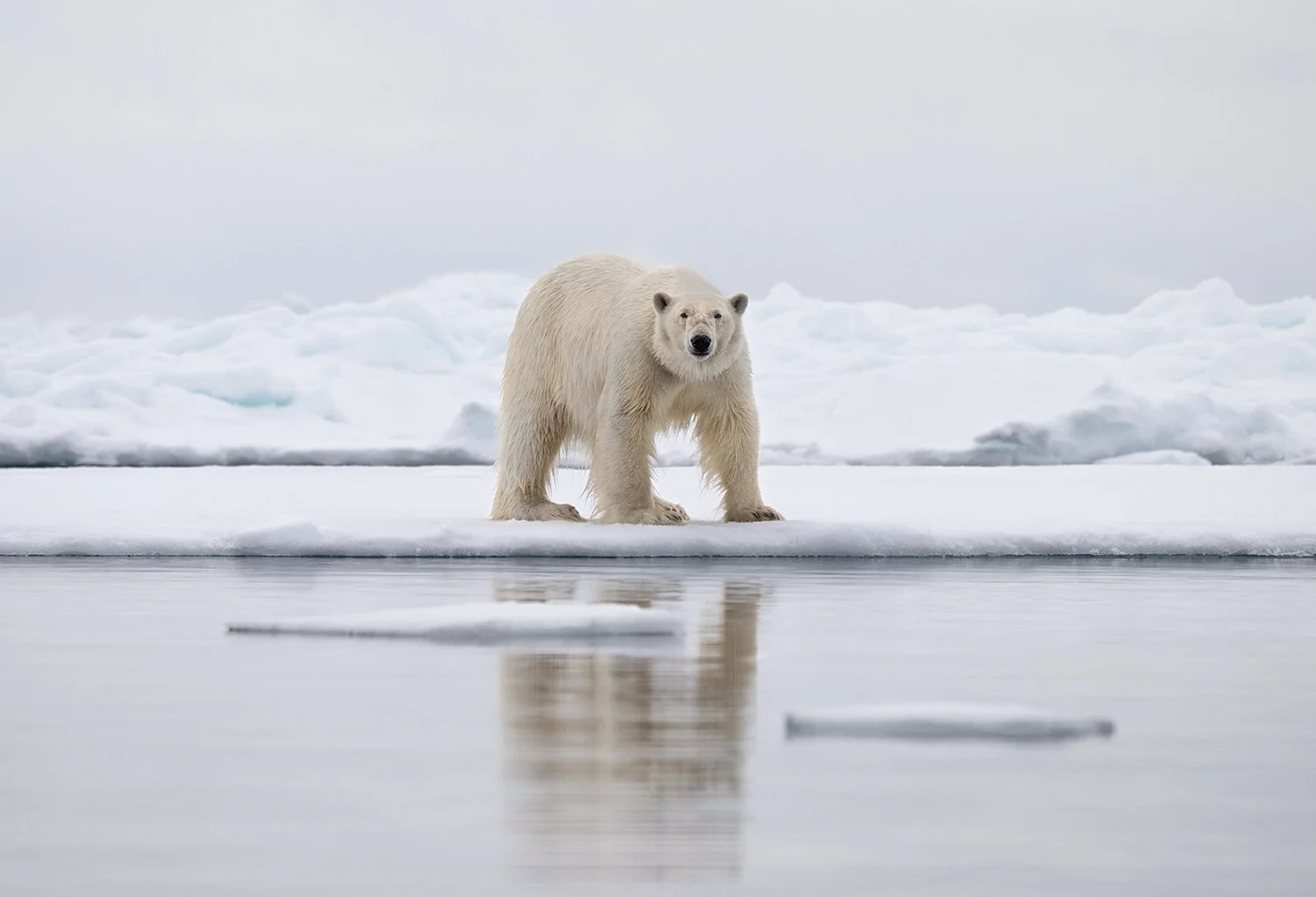
We had several false alarms. Movement in the water turned out to be a seal. As polar bear fur actually is transparent and hollow, rather than white, bears often appear yellowish in color against the ice, especially if they are wet. But so far the only yellow colors we had seen were pieces of dirty ice.
We continued meandering through the ice, and suddenly, in the distance to my left, I thought I saw the bear, inquisitively peering at us again from a high perch of ice. “I think I’ve got him,” I said, as I snapped a shot with my camera.
“I think that’s just dirty ice,” replied Timo, straining his eyes in the direction I was pointing. I looked at the monitor on my camera, and showed it to Josh.
“No, it’s the bear,” he said. “We’ve got it on camera. Head that way.”
Yes, it was the bear. A young male, very curious and with a slightly bewildered look.
The bear descended from his perch in the ice and sat down to look at us.
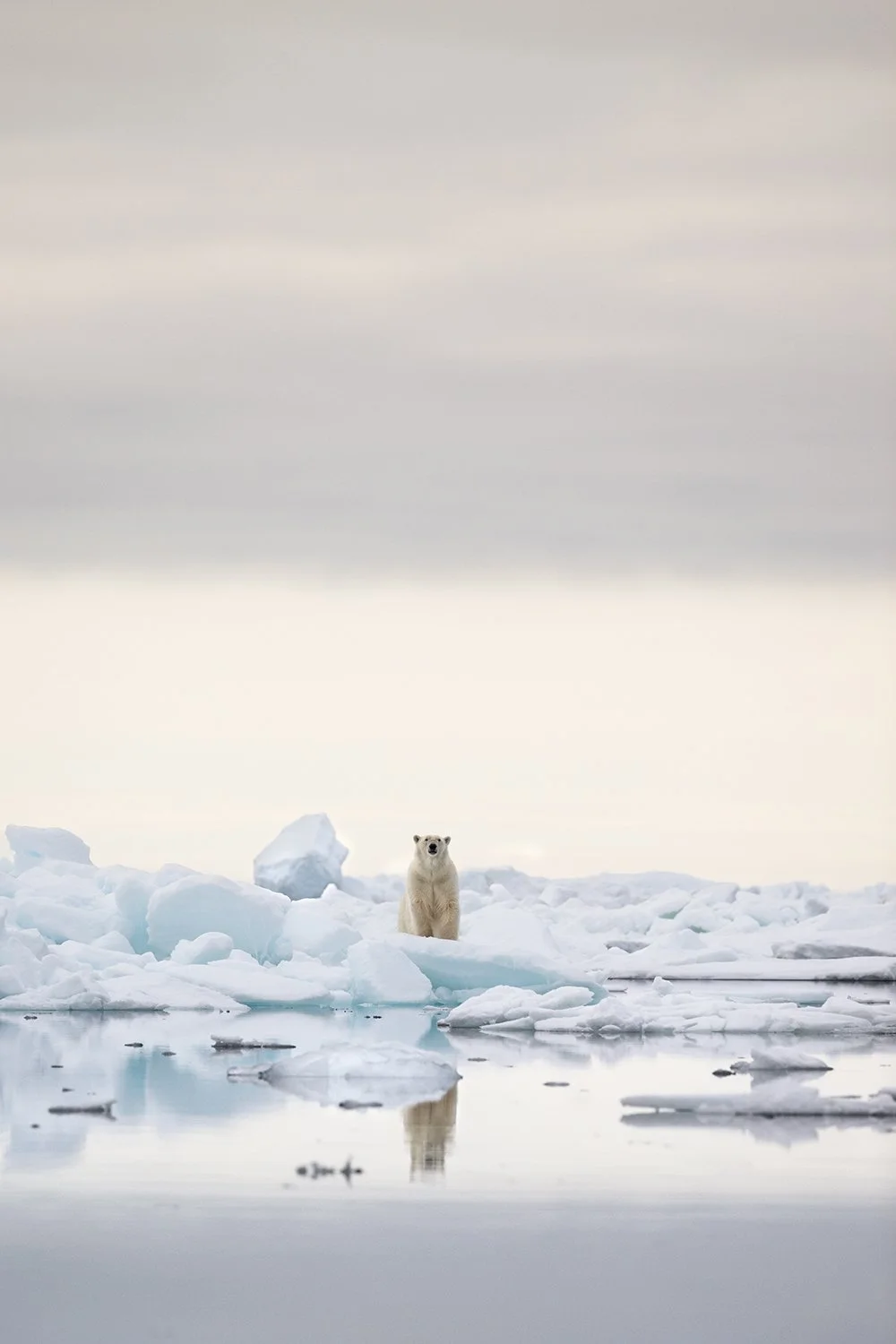
“What are you?” he seemed to be asking.
As we approached closer, his confidence appeared to wane slightly, and he slipped into the water and swam to a nearby ice floe, evidently confounded that we could keep up with him as he effortlessly lifted himself onto the ice.
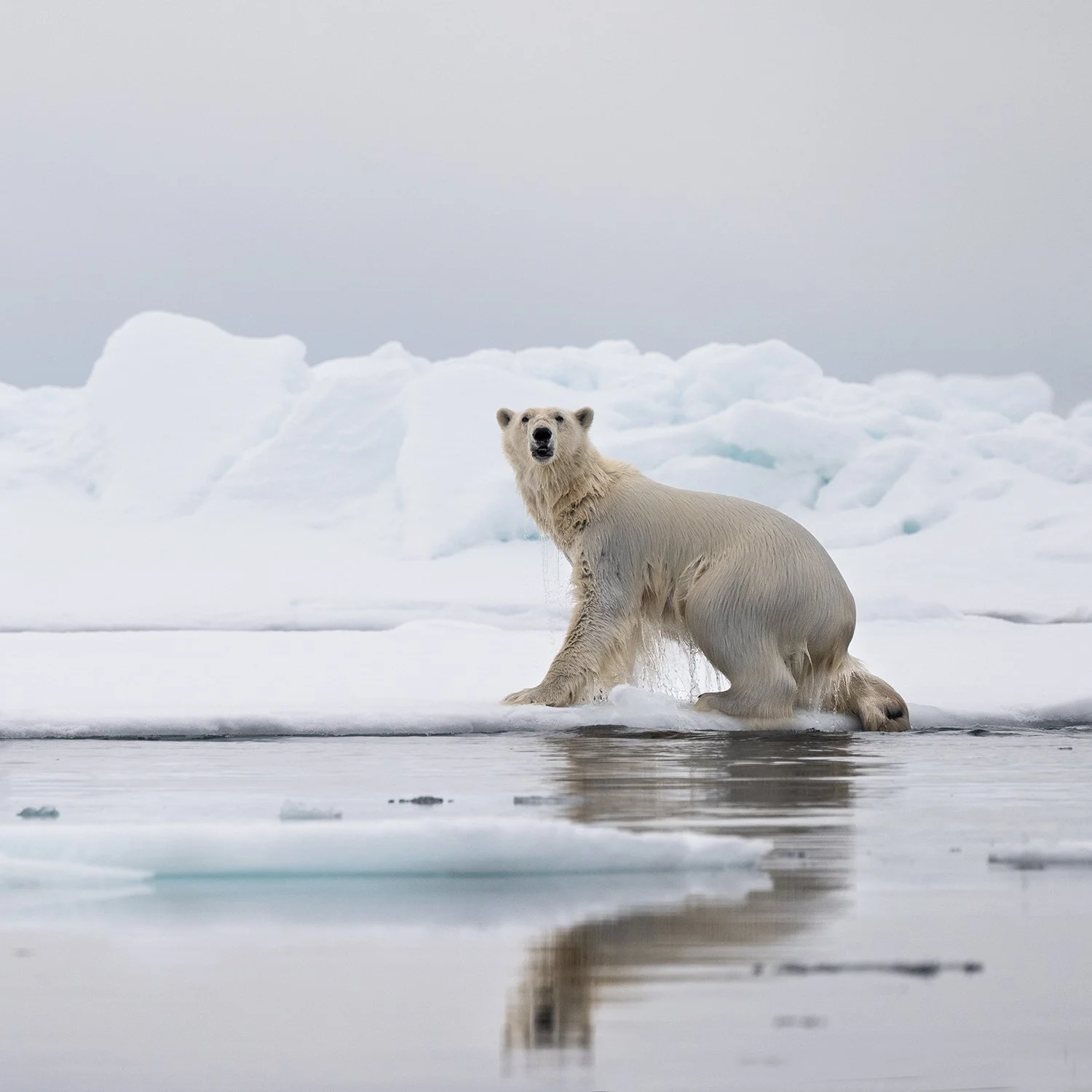
He walked one length of the floe, and peered at us, then traced back his steps and walked to the other end of the floe, and looked at us again. It’s quite possible that this young bear had never seen a human being before, and he didn’t know what to make of us.
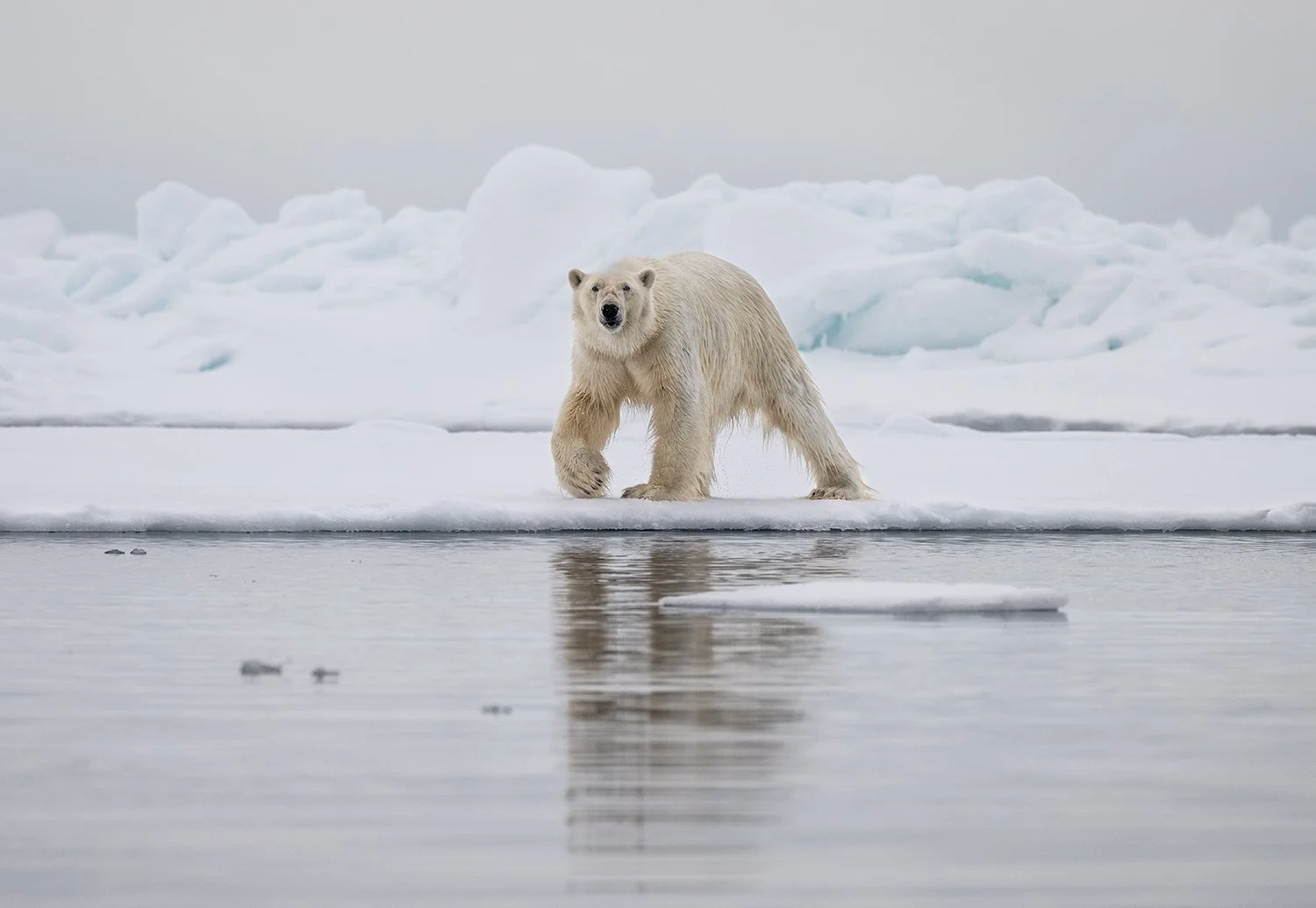
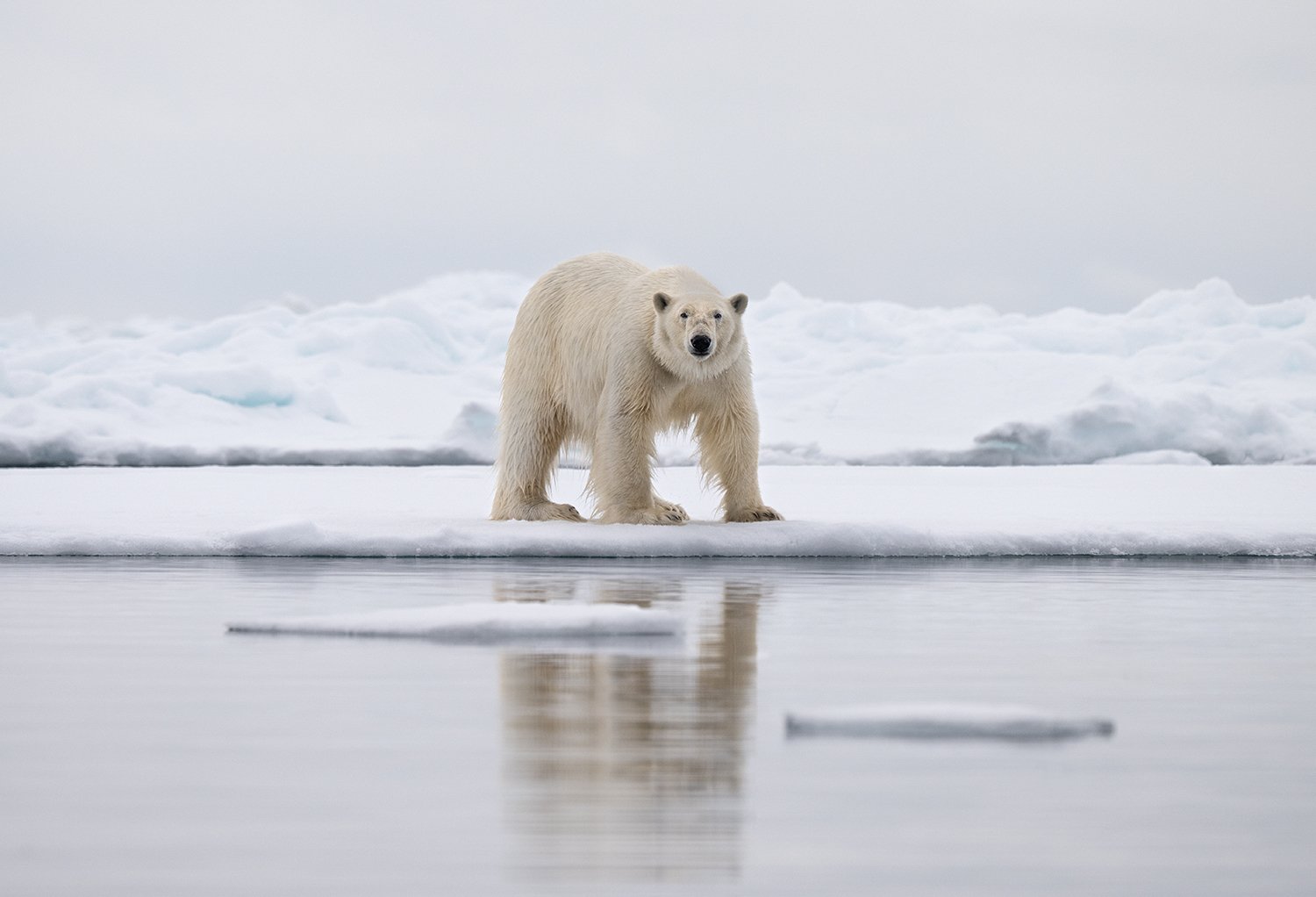
Eventually, the bear slid back into the water, and began swimming away. Josh, to his credit, cut the air with his forearm, signaling to Yves and Timo to not pursue any further. Although I am a wildlife photographer, the well-being of my subject always takes priority. While we were well outside of Svalbard’s regulatory boundaries, we all agreed that if this bear was even slightly uncomfortable with our presence, it was time to retreat and leave him in peace.
Nevertheless, we had managed to take some gorgeous photos, and everyone was smiling broadly.
As we approached the ship, Josh looked at me, nodding approval. “Good spot. You found him first, and you found him again. That was definitely your bear!”
My fellow travelers on that ship still refer to it as “Peter’s Bear.” But beyond the photos, the memory of that magical experience is what I will always treasure.
And as exciting as it was to find “my bear,” I have to wonder: What else out there in that vast expanse did we miss?