
RIP, Craig
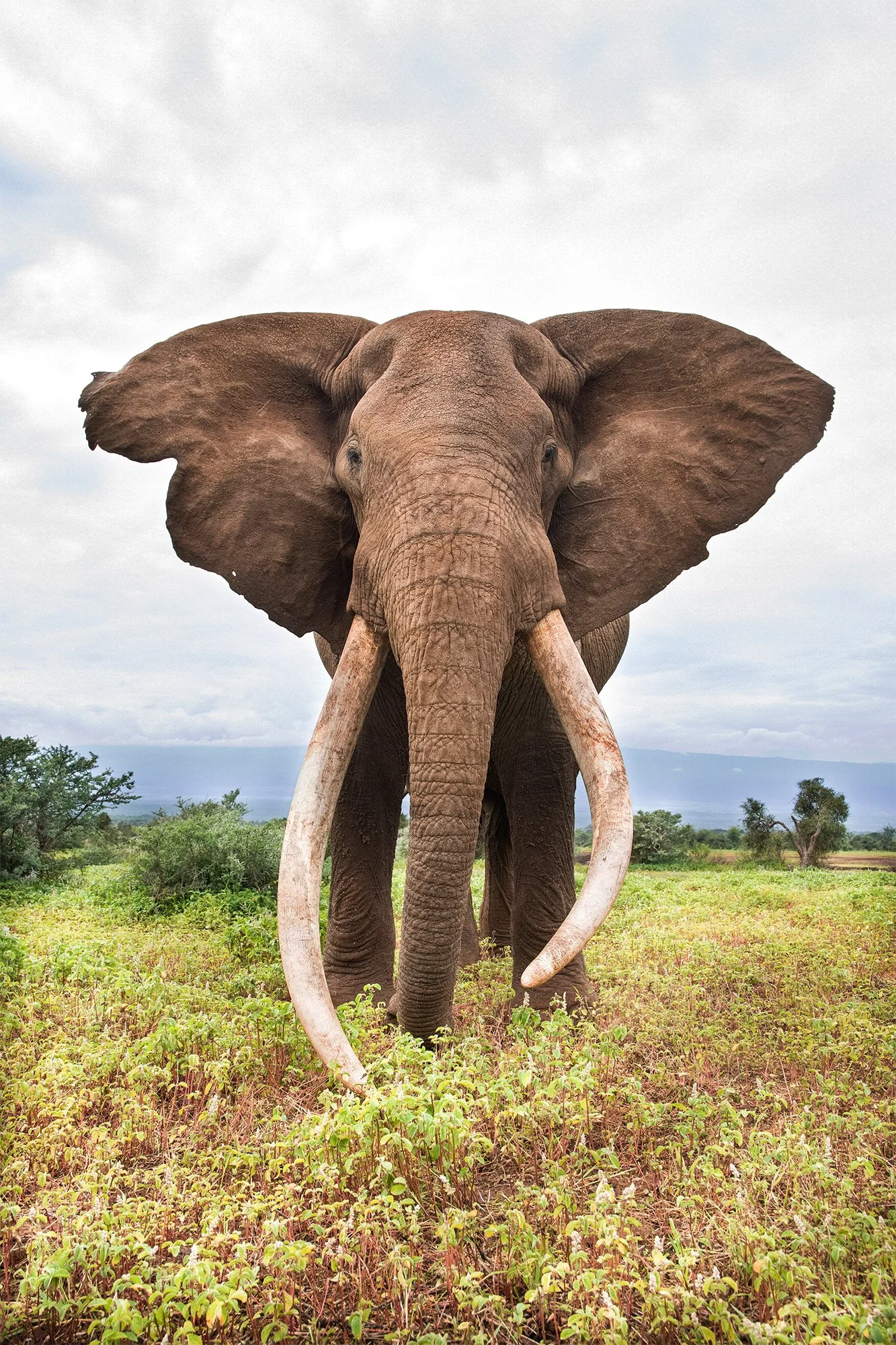
On January 3, 2026 I received the bittersweet news that Craig, a famous bull elephant in the region of Amboseli National Park in Kenya, had died of natural causes. He was born in January 1972, so he was about 54 years old.
I say the news was “bittersweet” because, although I am sad at his passing, I am grateful that Craig managed to live in peace to a ripe old age.
I had read reports in previous months that his health was declining. Over the course of its life, an elephant will develop six sets of molars, with each set gradually replaced by another until the sixth, and final, set. The elephant relies on these teeth to grind up the massive amounts of vegetation that makes up its diet. But once the sixth set wears out, the elephant can no longer chew its food sufficiently, and eventually it will die of malnutrition. This is what happened to Craig.
If that sounds grim, consider the alternatives. Between poaching to support the ivory trade, professional game hunting, and increasing human-elephant conflict in the wake of population growth, African elephants are under tremendous pressure. With each passing year, the chances that an elephant will live a full life and die a natural death become more slim. At least Craig was afforded the opportunity to let nature take its course instead of being shortchanged by some of mankind’s more malevolent interruptions.
But what made Craig notable was not that he simply lived to an old age. Craig was what they call a “Big Tusker.” A Big Tusker is a mature elephant that has grown huge tusks, each weighing at least 100 pounds, with at least one touching, or at least close to touching, the ground. Most Big Tuskers are males, but they can be females as well, although the tusks of the females typically are much narrower in breadth.
Very few elephants qualify as Big Tuskers. It is estimated that there now are no more than 20 elephants on the African continent that would be considered Big Tuskers (with perhaps the same number of younger elephants that appear poised to develop into Big Tuskers). Their massive tusks are the result of a genetic trait, and that trait is rapidly disappearing due to poaching and game hunting. If what you value is a quantity of ivory or an impressive trophy on your wall, a Big Tusker is going to be your primary target. The more that Big Tuskers are culled, the fewer their opportunities to mate and produce new generations of Big Tuskers.
Among contemporary Big Tuskers in Africa, Craig was considered the most majestic. But it wasn’t just his rarity and immense size that made Craig famous. He also had an unusually relaxed and calm demeanor, a true gentle giant.
I had the privilege to experience Craig’s extraordinary presence myself when I visited Amboseli in January 2022. At the time, strict travel restrictions due to the Covid-19 pandemic were still in place, and the number of visitors to Kenya was exceptionally low. But we made it through, and my one request to our guide at Amboseli was to help us find Craig, if at all possible.
On our third morning there, our guide received a radio call. The trackers had found Craig in the company of a small group of other mature bulls on a private reserve adjacent to the National Park. If we wanted to see him, we needed to depart immediately, as we would need to pick up our Maasai tracker at the Park gates and then make our way to Craig’s reported position in the reserve. It was full throttle ahead!
The reserve was lush with grass and wildflowers. The short rains that typically fall in November and December had been late to arrive, but they made up for their tardiness with heavy deluges that had transformed the landscape into a sea of green. Nearby Mount Kilimanjaro had graced us with a good view of its ice-capped peak earlier in the day, but now was socked in with clouds, giving our surroundings a soft, ethereal feel.
We wound our way through the acacia trees, and then, suddenly, he was there in front of us. Craig. One of the biggest elephants I have ever seen. I sat transfixed as he calmly fed on the low-lying bushes around us. I laid down on the floor of the vehicle in order to get as low an angle as I could, and as I photographed him, trying to keep my hands from trembling, I heard the words I will never forget: “You can step out if you would like.”
What? Get out of the vehicle in front of one of the largest bull elephants in the world? Are you crazy? Elephants, especially a bull in musth or that is otherwise skittish or agitated, can be incredibly dangerous. You don’t want to want to spook or upset them in any way. Even in a vehicle, the guide must be aware of a route out in case the elephant decides to charge.
“Yes,” replied our Maasai tracker, nodding his head with a smile. “Not with any other elephant. But with Craig, yes. He is gentle and wise.” Our guide and the tracker were both respected and experienced veterans who had spent years in the field with Amboseli’s elephants. They knew them better than anyone. And so, trying to minimize my movements, I took my spare camera with a wide-angle lens attached and, in as fluid a single motion as possible, crouched as I went down the steps of our Land Cruiser and knelt on the damp ground directly beside it, remaining fully alert should I quickly need to clamor back up.
Craig towered above me a short distance away, completely unfazed, and I spent the next 20 minutes or so engaged in one of the most unforgettable photographic experiences of my life – making intimate images of one of Africa’s last and greatest Big Tuskers. It was just Craig and us, a slight breeze, melodic birdsong, and mighty Kilimanjaro hiding in the background. One doesn’t get chances like that very often.
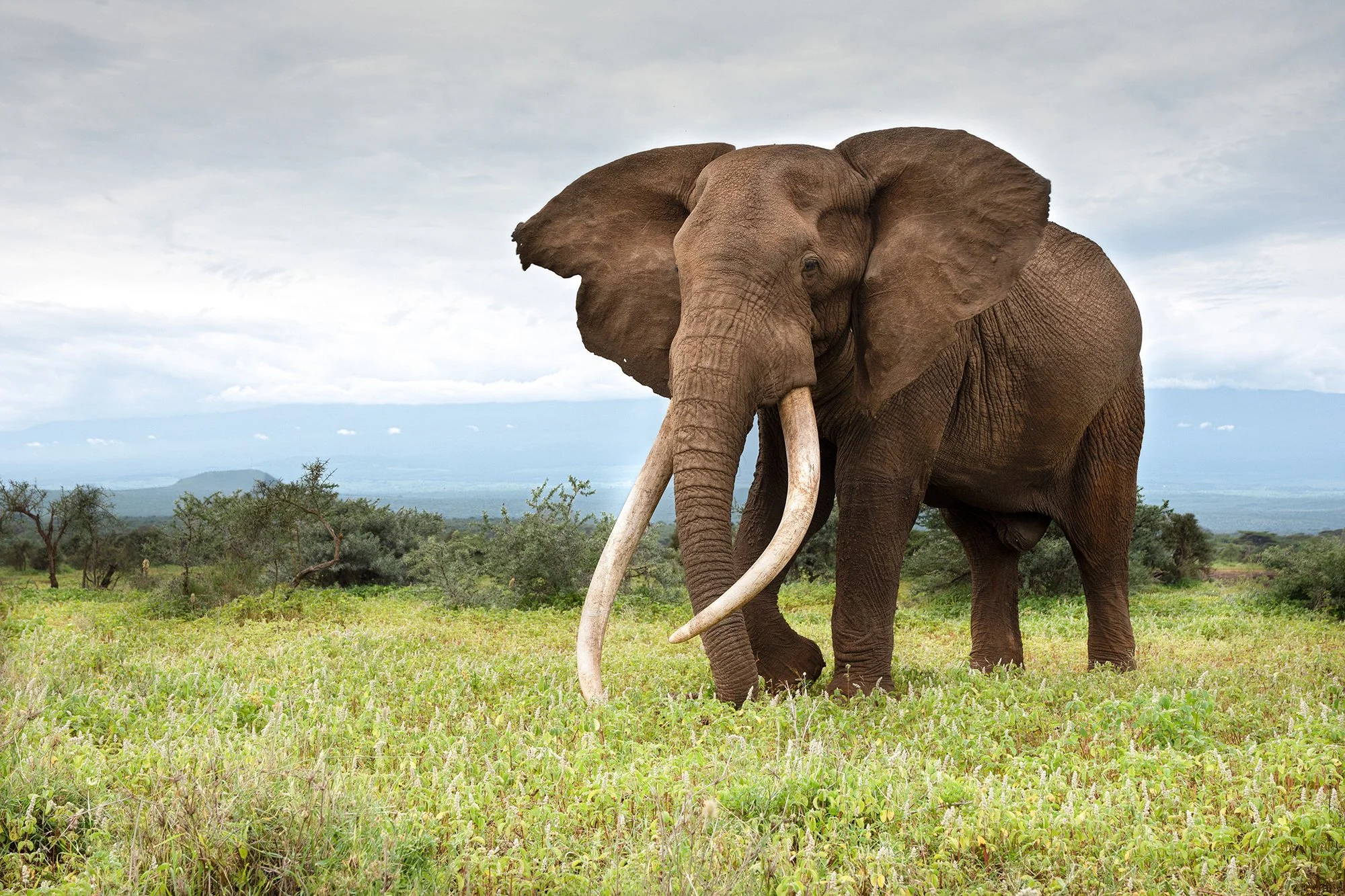
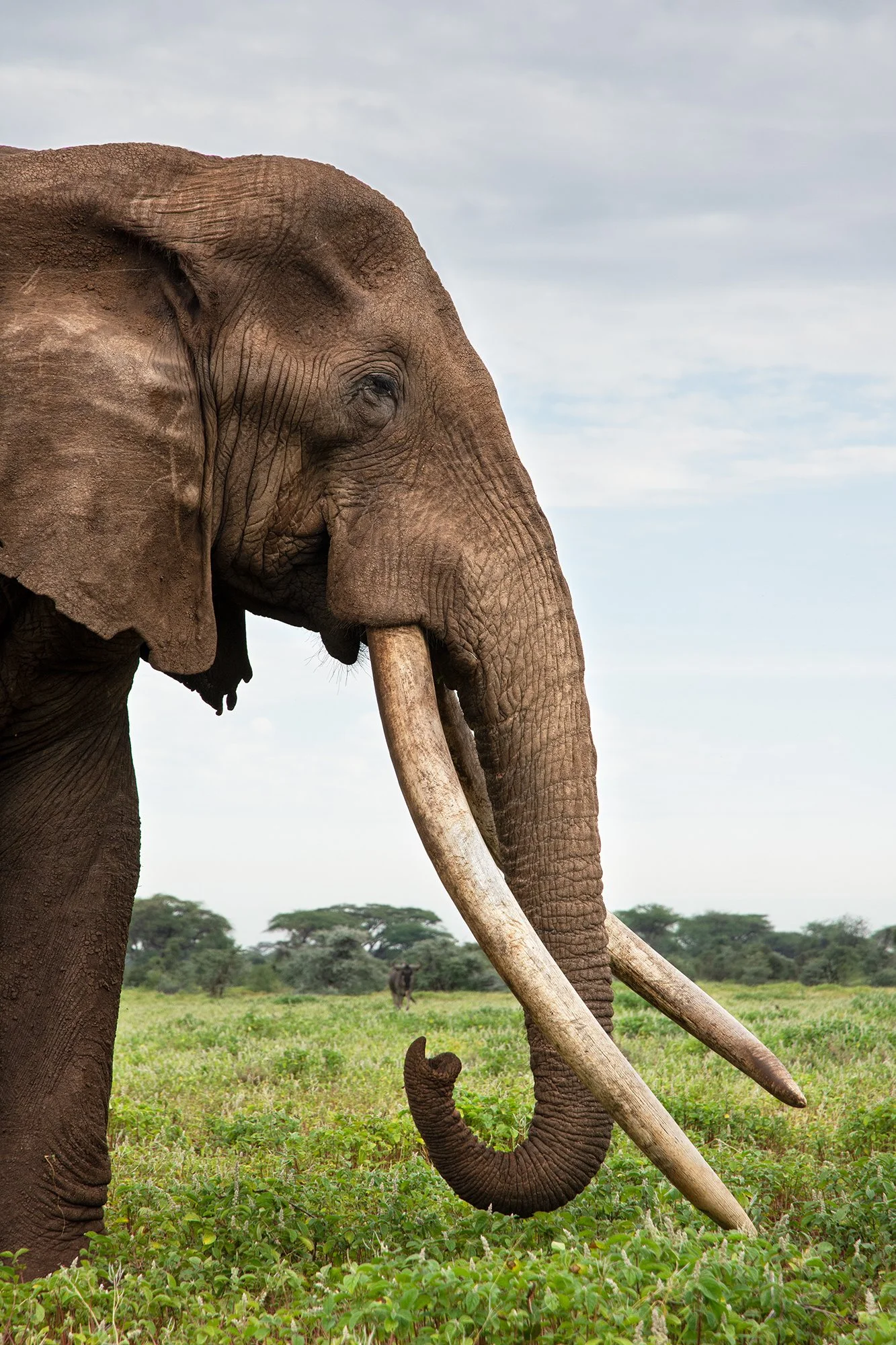
So at the start of this new year, I raise a glass to you, Craig. May your progeny follow in your tremendous footsteps. Kwaheri na asante (“Goodbye, and thank you.”).